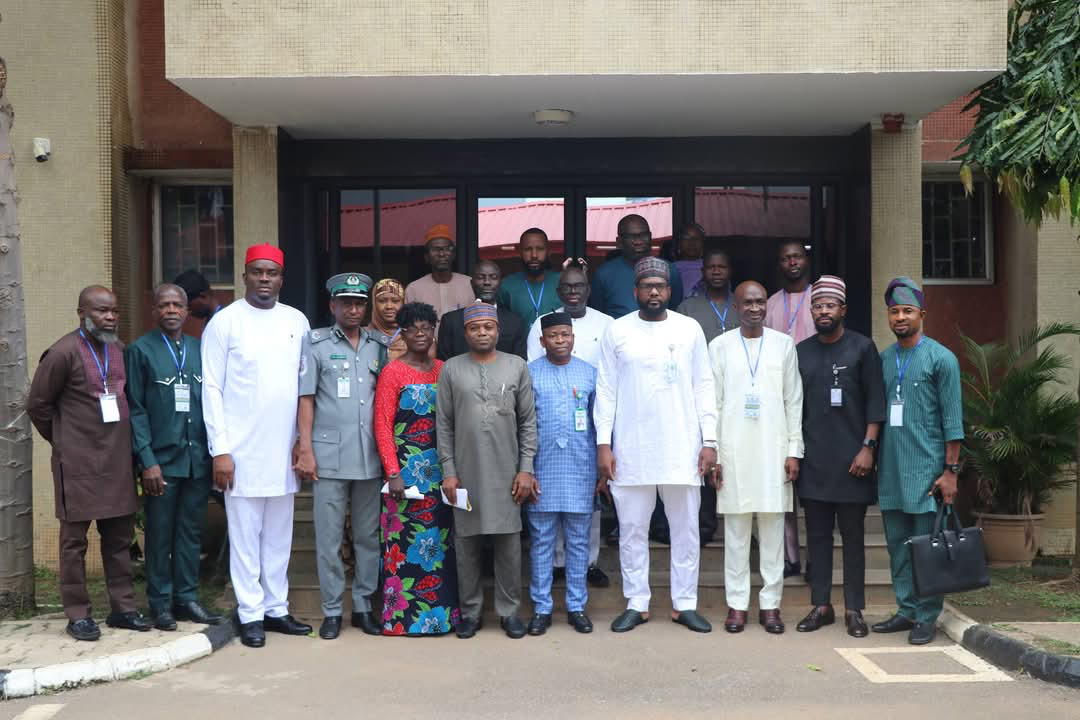
Interview Title:“Science, Service & Leadership: The Dr. (Mrs) M. M. Adeyanju Story”
Interview Title:“Science, Service & Leadership: The Dr. (Mrs) M. M. Adeyanju Story” Preamble:In this edition of Science and Tech Connect Blog Interview Session, we spotlight Dr. (Mrs.) M. M. Adeyanju—Associate Professor of Biochemistry and Head of Forensic Science at Olabisi Onabanjo University, Ago-Iwoye, Ogun State. For over two decades, she has combined groundbreaking research in enzyme biotechnology and food innovation with a passion for teaching, mentorship, and leadership. A trailblazer for women in science and a champion of youth empowerment, Dr. Adeyanju’s story is one of resilience, impact, and vision for the future of biochemistry and science education in Nigeria. Interview Questions Career Journey & Inspiration My career in biochemistry stems from a passion for understanding life’s molecular basis and applying it to health, agriculture, and industry. Since joining Olabisi Onabanjo University in 2001, I have advanced through teaching, research, and leadership, with interests in enzyme biotechnology, food innovation, forensic science, and quality assurance. My work spans curriculum development, mentorship, and institutional strengthening, reflecting a two-decade journey from laboratory research to integrated scholarship, innovation, and leadership. 2. S&T Team:Looking back, what were the most defining moments in your academic and professional career that shaped the leader and researcher you are today? Since joining academia, I have contributed to teaching, research, and leadership, with several defining moments shaping my journey. Choosing biochemistry provided a strong foundation for understanding life processes and their applications, while joining Olabisi Onabanjo University in 2001 offered a platform to combine teaching, research, and service. Transitioning from researcher to leader expanded my role into quality assurance, curriculum development, and governance, strengthening institutional systems. Mentoring young scientists and supervising postgraduate work deepened my commitment to capacity building. My research further shaped my identity, extending scholarship beyond theory to societal relevance, fostering a leadership style rooted in rigor, collaboration, and service. As a woman in science, I have encountered challenges ranging from system-level barriers to societal norms and expectations, particularly the need to balance professional responsibilities with cultural expectations around family and caregiving. Early in my career, proving competence required extra effort, while navigating gender bias meant asserting my voice and value in competitive spaces. Limited access to opportunities further tested resilience. I overcame these barriers through mentorship, supportive networks, and excellence in teaching, research, and leadership. Mentoring younger women became central to my journey. These experiences, though demanding, shaped me into a leader committed to personal excellence, inclusivity, and advancing equity within academia. Teaching & Mentorship My teaching philosophy is to make biochemistry meaningful by linking molecular processes to real-life applications. In teaching Protein and Amino Acid Metabolism, I emphasize clinical relevance, such as metabolic disorders like phenylketonuria, alongside industrial uses, including microbial fermentation and protein engineering. This dual perspective engages students by showing biochemistry’s impact beyond exams. I reinforce learning through case studies, problem-based tasks, and discussions that integrate health and industrial contexts. By positioning biochemistry as both foundational science and driver of innovation, I foster curiosity, critical thinking, and motivation, encouraging students to actively connect theory with practice. 5. S&T Team : Many of your students have gone on to successful careers. Could you share a mentorship experience that left a lasting impression on you? Mentorship is one of the most fulfilling aspects of my career, and I take pride in seeing students excel beyond the classroom. A memorable example is a student who recently earned a fully funded PhD scholarship at the University of Kansas. Recognizing his curiosity early, I guided him in refining his research interests, building skills, and preparing competitive applications. Watching his growth from eager learner to confident scholar was deeply rewarding. His success reaffirmed my belief that mentorship is about more than knowledge—it is about inspiring confidence, nurturing potential, and shaping the next generation of scientists and leaders. Research & Innovation 6. S&T Team : Your research covers enzymology, nutrition, proteomics, andfermentation technology. Which of your completed studies do you consider most impactful for public health in Nigeria, and why? Among my studies, I consider my work on enzyme applications in food and fermentation technology especially impactful for public health in Nigeria. One project explored using locally sourced microbial enzymes to enhance the nutritional quality and safety of fermented foods, improving protein digestibility, reducing anti-nutritional factors, and increasing micronutrient bioavailability. This addressed malnutrition and food insecurity with culturally acceptable, affordable solutions. Additionally, my work in nutritional biochemistry and proteomics—examining amino acid metabolism and protein quality—has advanced understanding of diet and health. Collectively, these studies bridge scientific discovery and societal need, offering sustainable strategies to improve nutrition and health outcomes. 7. S&T Team : You are currently working on enzyme purification from ant-lion larvae and on sorghum-based liquor. What excites you most about these projects, and what real-world applications do you foresee? What excites me most about my current projects is their potential to expand knowledge while addressing practical challenges. In studying enzyme purification from ant-lion larvae, I am exploring novel enzymes with unique catalytic properties, offering applications in biodegradation, drug development, and industrial bioprocesses. This work broadens enzyme diversity and deepens understanding of insect biochemistry. Likewise, my research on sorghum-based liquor optimizes fermentation to enhance quality, safety, and value. With sorghum’s resilience and cultural importance, the project supports food security, nutrition, and local industry, while promoting economic empowerment and healthier, locally produced alternatives to imported beverages. What I find most rewarding is that both projects demonstrate how biochemistry can serve as a bridge between fundamental science and societal benefit—whether by uncovering novel enzymes with industrial potential or by enhancing the nutritional and economic value of indigenous crops. 8 S&T Team :. With over 30 peer-reviewed publications, how do you ensure that your research remains relevant to both local and global health challenges? My research is guided by the principle that science must address real needs. In Nigeria and Africa, malnutrition, food insecurity, and limited access to health technologies remain pressing, so I focus on locally available resources—such as sorghum and enzymes from underutilized organisms—to create sustainable, affordable solutions.
Interview Title:“Science, Service & Leadership: The Dr. (Mrs) M. M. Adeyanju Story” Read Post »