


In this August 2025 edition of our Science and Technology Interview Series, we spotlight a rising academic whose influence is being felt globally—Dr. Muideen Remilekun Gbadamosi.
At an age when many are still charting their paths, Dr. Gbadamosi has already distinguished himself in the fields of analytical and environmental chemistry, with remarkable contributions to sustainability research, inclusive education, and international collaboration. A Fellow of the UK Higher Education Academy (FHEA), he exemplifies how youth, expertise, and vision can converge to shape the future.
With a PhD from the University of Birmingham, Dr. Gbadamosi’s research explores areas such as organophosphate pollutants, radioisotope contamination in soil and sediment, and the use of fuzzy logic in modeling complex environmental systems. Yet, his true distinction lies in his ability to integrate science with policy, education, and social impact.
From assessing radiological risks in Nigerian quarry sites to championing equitable access to science education, Dr. Gbadamosi consistently brings depth, clarity, and purpose to his work. His recognition as an “Inclusive Educator” speaks to his commitment to student-centered learning and innovative teaching approaches.
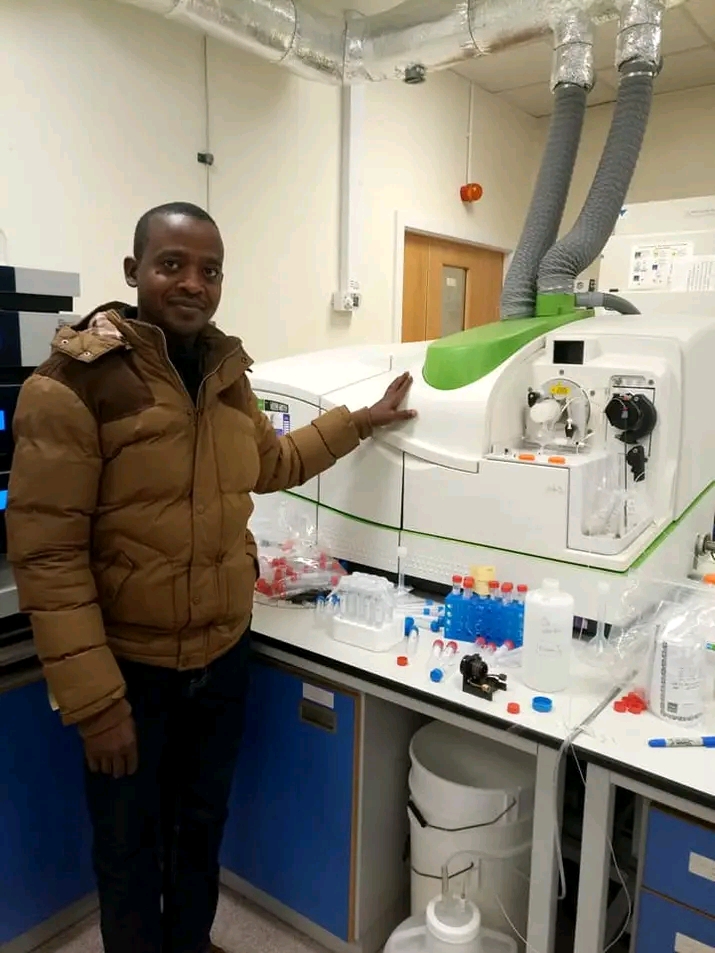
Currently a lecturer at Coventry University, with academic and research experience across both Nigeria and the UK, Dr. Gbadamosi is actively bridging the gap between the Global South and North, and between scientific discovery and societal needs.
In this candid interview, he reflects on his formative years in Nigeria, his academic journey, and life as a young scholar in the diaspora. He shares insights on environmental justice, the future of science in Africa, and his mission to drive change where technology, education, and sustainability intersect.
Dr. Muideen Gbadamosi’s story is more than one of early success—it’s a compelling vision of the future, led by intellect, purpose, and unwavering passion.
1. Can you take us back to your early years—your childhood and secondary school experience? What was it like growing up in your hometown, and how did those formative years influence your interest in science?
Answer:
I grew up in Owode – Yewa but started my primary education in a town called Ilobi in Yewa South LGA of Ogun State where I stayed with my late grandpa, a small town where community life was close-knit and resources were limited. My early childhood there was shaped by a strong sense of communal values -people knew each other well. There the classrooms were basic, yet the teachers were dedicated and instilled in us a discipline that became foundational for my academic journey.
Later, my dad took me Owode Yewa in primary three which offered slightly broader opportunities including more structured teaching and more dedicated teachers but also have it set-back too as Owode-Yewas was characterised with smuggling activities at that time. That period was characterised by high smuggling activities with lots of smugglers dominating the society than those who went to school to have good education. Nevertheless, The transition exposed me to a wider range of subjects and sparked my curiosity, particularly in science especially with one of my teacher Mrs Badmus who picked particular interest in me as a local champion from Ilobi and now in Owode but she picked that interest in me because I am very good and we also bear the same surname, Gbadamosi is what some people changed to Badmus now. Some of my family members have changed theirs to Badmus but I like my grandpa so much. He is no more now but his impact on me remains forever as he used to sell books, pencil and pen in Ilobi and used to supply those teachers in credit to sell. The teachers make their profit from it and pay him back and the cycle continued like that. So virtually all the teachers in Ilobi at that time knows me through my grandfather. Those formative years in Ilobi and Owode taught me perseverance and adaptability. Coming from a rural setting, I had to rely heavily on self-motivation, often studying under limited conditions. That experience shaped not only my interest in science but also my determination to pursue it further, eventually guiding my path toward higher education and my current academic career.
2. During your undergraduate studies, what were some pivotal moments or challenges that helped shape your path toward environmental and analytical chemistry?
Answer:
Thank you, I did not study Chemistry for my undergraduate degree. I graduated with first class in Petroleum and Petrochemical Science and as the overall best graduating students for my set in 2010 at the Tai Solarin University of Education (TASUED), which is now a Federal University. There is strong link between Petroleum and Petrochemical Science and Environmenta/Analytical Chemistry as there is no way you could be a good petrochemical scientist without a strong foundation in chemistry, physics and mathematics, including biology. The pivotal moment is that I have gone through A ‘level called IJMB and I scored very high grade at the Kwara state polytechnic that qualifies me to study medicine at the university of Ilorin or any northern university that accepted IJMB at that time. IJMB is a very good programme coordinated by Ahmadu Bello University with a good syllabus that covered most undergraduate subject to at least 200 level thereabouts. So, I tried to secured admission at the Unilorin for two years and they did not offer me a chance to study medicine. I then decided to retuned home after the second year. The admission was dictated by number of factors such as to be from Ilorin or Kwara state, you have to know some big Professors etc and I did not know anyone. I decided to return home and re-strategies and that is how I found myself studying Petrochemical Science at TASUED. So having gone through A ‘level, all my 100L was like a revision to me, In fact, I only go to class for the purpose of attendance for most of the lectures in Chemistry, Physics, Mathematics and Biology because I know where the lecturer is going and I do organised tutorial for my peers even if I did not attends the lectures. There are two lecturers in chemistry – Mr Begun and Mr Osinaike of blessed memories, they are fond of given marks in class for students that answer some difficult questions in class as a formed or encouragement. I used to get all their marks. The only course that I normally attend are the education courses because TASUED give you two tiers degree which enable you to have strong foundation in your subject areas or course and have the pedagogy skills and that is why it is BSc (ED). So, there is no challenges until around 200 level second semester to 300L when it is pure Petrochemical courses like well testing, enhance recovery techniques, reservoir modelling, geophysics, geology etc. But with strong foundation and getting some e-books which I do get free online, that become so simple for me to navigate, and all courses returned with mostly As. I have no challenges on my part to study, the little challenges I encountered was financial challenges to pay school fees and the rest but because I do some paid teaching outside Ijebu-Ode with what my parents give to me, it becomes easy for me. So this Petrochemical Sciences which was a coursed carved out from Petroleum Engineering, Geology, Geophysics and Chemistry gave me that chance to know some of the challenges in oil and gas industry and this is what spurred my interest in environmental chemistry part of it and more important reason why I decided to go for chemistry for my Masters was because at the time of my graduation, I was offered an automatic employment as the overall best graduating students with first class. But on my resumption, there is an issue from the then governor Amosun that want to scrap TASUED but when he did not succeeded, he picked some flimsy excuses as the reasons for such action which one is that the university are offering courses outside education and this make the university to delist courses like Petrochemical science, mass communication, telecommunication etc. Then for me to be relevant in the department, I have to go for higher degree that I can teach and that make me to divert to the nearby course that I have been thinking about which is environmental chemistry and pollution control at the University of Ibadan and graduated as the best student in that unit with a PhD grade. One would have wondered, how can a university that want to be conventional be restricted to be specialized when they have the resources to do that, who does not know that educationists with sound knowledge or the subject matter are needed even in oil and gas industry, same as in telecommunication and the rest. In fact, educationists are needed in all spheres of human endeavour. This is what shaped my path toward environmental/analytical chemistry.
3. You hold a PhD in Analytical/Environmental Chemistry and are a Fellow of the Higher Education Academy (FHEA). What initially drew you to environmental chemistry, and how has your academic journey evolved over time?
Answer:
Apart from what I have explained earlier, what drew me to environmental chemistry was the applicability to wider area and wide acceptability of the course. Environmental chemistry is not an abstract area of chemistry. It has a wider application, and you cannot be out of job with it if you truly know what you are doing. There is always one environmental issue or the others to discuss and new emerging contaminant are coming as we grow in technology and rapid changes in the society through some of the industrial and consumer products that we used daily; this always bring the other environmental challenges that need a sound environmental chemist to deal with. As we speak there are some emerging contaminants that we have not started looking at or monitoring or analysing in Nigeria. There is no single data on some of the emerging contaminants in Nigeria and these are contaminants of health and environmental concerns. Earning a PhD in Analytical/Environmental Chemistry allowed me to apply rigorous laboratory techniques to solve real-world environmental challenges and gave the right advise to govt. Over time, my academic journey expanded beyond research alone. I developed a strong interest in teaching and capacity building, leading me to engage deeply with higher education pedagogy. Becoming a Fellow of the Higher Education Academy (FHEA) reflected that shift – acknowledging not just my subject expertise but also my commitment to effective teaching, curriculum design, and student engagement. Today, my work blends those two strands: applying analytical science to environmental challenges while also shaping the next generation of scientists. The journey has been less about a single defining moment and more about a series of experiences that reinforced the same core motivation – to use science as a practical tool to solve real environmental problems and to empower others to do the same
4. You’ve been recognised as an “Inclusive Educator” by the University of Birmingham. What does inclusive education mean to you in a scientific context, and how do you implement it in your teaching?
Answer:
To me, inclusive education in scientific context means ensuring that every student regardless of their background, prior exposure to science, or learning style has an equitable opportunity to engage with and succeed in the science or science related subject. This is about making scientific learning rigorous and inclusive/reachable by creating multiple pathways for students to meet their learning goals. Implement this by designing teaching materials that present complex concepts using multiple representations from simple to complex, visual diagrams, real-world analogies, and step-by-step breakdowns, presentation and laboratory report so that students with different learning preferences can access the content, video record and the used of VLE to enhance inclusive and engagement. Second, I use formative assessments and low-stakes feedback to identify gaps early, allowing me to adjust my approach rather than assuming everyone progresses at the same pace.
5. As a lecturer at Coventry University and with your experience in Nigerian institutions, how do you adapt your teaching strategies across diverse educational systems and student populations?
Answer:
Teaching across different educational systems such as Nigerian institutions and Coventry University requires adapting both content delivery and classroom strategies to align with variations in curriculum structure, resource availability, and student expectations. Some high level of flexibility and adaptation is the main thing.
In Nigeria, I often worked with larger class sizes, more traditional lecture formats, and students who were accustomed to rote learning. To keep them engaged, I placed emphasis on structured explanations, repetition of key principles, and problem-solving exercises that reinforced theoretical knowledge and practical skills. Do not forget you have to learn to work with limited resources in Nigeria and sometimes I have to improvised sometimes in order to meet the learning outcomes.
At Coventry University, students are encouraged to be more independent and are assessed on critical thinking, teamwork, and research application. My teaching in Coventry focuses more on interactive methods: flipped classrooms, case-based discussions, mini-laboratory exercise with limited supervision, competency-based teaching and assessment and project-based learning. I also integrate digital tools and online simulations to extend learning beyond the physical classroom.
Despite these differences, one consistent strategy is to understand my students’ starting points. I use diagnostic assessments, encourage open dialogue, and provide scaffolded support—gradually increasing complexity as their confidence grows. I also remain sensitive to cultural differences in participation styles, communication norms, and prior educational experiences, ensuring that I create an environment where all students feel comfortable contributing in Coventry University which is not the way in Nigeria because all of us mostly have the same culture.
In summary, my approach is to remain flexible while holding the same academic standards: tailoring the route but keeping the destination constant.
6. What role does student engagement play in your curriculum design, especially in complex subjects like analytical chemistry and environmental monitoring?
Answer:
When design curriculum I always ensured that student engagement is central which is more important in any science subject particularly for analytical chemistry and environmental monitoring, which can be conceptually dense and technically demanding. If students are not actively involved to make them understand the principles governing various instrumentation and how to operate it, they tend to focus on memorization rather than understanding, which undermines both retention and application.
When designing modules, I deliberately build opportunities for active learning. For example, I break complex theories into smaller units and pair them with practical or real-world examples such analysis of drug in a simulated urine samples using HPLC or linking spectroscopic principles to absorbance and concentrations measurement in a poison drinks. I incorporate problem-based tasks, case studies, and short data analysis exercises so students can see the immediate relevance of what they are learning.
In full laboratory components or mini-project exercise, I encourage structured inquiry rather than step-by-step ‘recipe’ experiments. Students were asked to design the method for the analysis and to predict outcomes, justify their methods, and reflect on errors. This not only increases engagement but also develops critical thinking and independence.
7. Your research covers topics such as organophosphate esters, radionuclides, and sediment geochemistry. How do you select your research topics, and what common thread connects these seemingly different areas?
Answer:
Both organophosphate esters, radionuclides and sediment geochemistry are environmental chemistry using analytical analysis, the difference is while organophosphate is organic pollutant, radionuclides and sediment geochemistry are inorganic pollutant, and they are all environmental chemistry which we used various analytical instrument to measures. Therefore, at first glance, organophosphate esters, radionuclides, and sediment geochemistry may seem unrelated, but my selection of research topics is guided by a consistent principle: understanding and mitigating the chemical impact of anthropogenic activities on environmental systems.
I choose topics based on three main criteria: environmental relevance, analytical challenge, and potential for practical application. For example, organophosphate esters are widely used flame retardants and plasticizers; their persistence, toxicity and bioaccumulation make them emerging contaminants of concern. Radionuclides, on the other hand, are legacy pollutants from industrial and energy processes with well-documented ecological and health risks. Sediment geochemistry provides a natural archive of these pollutants, allowing us to reconstruct contamination histories, fingerprint the pollution sources and ascertain the toxicological effect and predict long-term mobility.
The common thread is the integration of analytical chemistry with environmental risk assessment. My work focuses on developing or refining methods to detect trace-level contaminants, interpreting their environmental behaviour, and translating those findings into knowledge that can inform policy, remediation, or monitoring strategies.
Ultimately, whether I’m studying synthetic organic compounds or radioactive isotopes (inorganic), the underlying aim is the same: to generate data that improves our understanding of pollutant dynamics and supports evidence-based environmental management to protect human exposure via the identified multiple human exposure pathways.
8. In one of your recent studies, you assessed radiological hazards in quarry sites in Ogun State, Nigeria. What were the key findings, and how might they affect local environmental policies?
Answer:
The key findings from this study are:
- Elevated concentrations of naturally occurring radionuclides 232Th, 238U and 40K were detected in most quarry soils.
- Some radiological parameters and health indices were exceeding global safety averages, with notable cancer risks indicated.
- The excessive lifetime cancer risk (ELCR) was substantially higher than the accepted values in 80% of the sites.
- The spatial heterogeneity and distribution suggest influence of both geological variation and quarrying activity.
- Recommendations include ongoing monitoring and restricting soil reuse for sensitive applications.
9. You’ve applied fuzzy logic modelling in your environmental risk assessments. Could you explain the value of this method in understanding complex environmental systems?
Answer:
Fuzzy logic is particularly suited for assessing pollution because it enhances the interpretation of regulatory limits and exposure risks. Additionally, it aggregates multiple pollutants and considers their toxicity or benefits, providing a comprehensive risk assessment rather than evaluating each pollutant in isolation.
10. You’ve shown interest in science’s intersection with human rights and policy, especially regarding environmental justice. In your view, how can scientists better influence government policy on environmental issues?
Answer:
Scientists influence government policy by converting complex data into easily understood, policy-relevant statements that prioritise environmental justice and human rights, present the data to government and have a greater impact on government policy on environmental challenges. Scientists characterise environmental deterioration, such as pollution from heavy metals, radionuclides, PFAS, OPEs, or POPs, or microplastics, as dangers to public health, equity, and fundamental rights to clean air, water, and land, rather than concentrating just on scientific discoveries and present the findings to the government which influence their decision.
Scientists contribute to government reports, offer evidence during legislative proceedings, and take part in policy discussions.
Furthermore, decision-makers can better understand environmental concerns by seeing localised data, risk maps, and cost analyses from scientific findings. To promote change, scientists must take advantage of “policy windows” like regulatory reviews based on emerging findings from outstanding research and the need for continuous review of the policy and regulation. They can create persuasive, justice-focused policy proposals by collaborating with economists, public health specialists, and attorneys in interdisciplinary partnerships.
In order to guarantee that science informs policies that safeguard both people and the environment, scientists must ultimately accept their position as public advocates, balancing impartiality with ethical duty. When environmental harm is ignored or ignored, injustice is frequently sustained.
Top of Form
Bottom of Form
11. With increasing global attention on sustainability, how do you think your work contributes to or challenges prevailing environmental narratives?
Answer:
As an environmental and analytical chemist, my work contributes to prevailing sustainability narratives by providing the empirical evidence needed to validate, challenge, or refine public and policy assumptions about environmental implications of all activities. Analytical chemistry is the backbone of environmental monitoring which allows us to detect, quantify, and monitor emerging contaminants such as per- and poly fluoro alkyl substances (PFAs), OPEs, and other persistent organic pollutants (POPs) and their metabolites that may be invisible and in trace amount but profoundly harmful.
By revealing the presence of such pollutants in food, water, dust, sediment, soil, air, and biological systems, my research helps bridge the gap between sustainability rhetoric and environmental reality. For instance, policies may label certain industrial practices or products as “green” or “safe,” but without rigorous chemical assessment, these claims can be misleading. My work, therefore, both supports and interrogates sustainability initiatives by demanding accountability based on data.
Moreover, analytical chemistry plays a key role in advancing circular economy models by identifying safe thresholds for waste reuse, assessing the effectiveness of remediation technologies, and ensuring compliance with environmental standards. In doing so, I contribute to evidence-based decision-making that upholds not just environmental protection, but also environmental justice, particularly in communities disproportionately affected by pollution and regulatory neglect.
In essence, my role affirms that sustainability must be measurable, transparent, and inclusive—not just aspirational.
12. You’ve worked across institutions in the UK and Nigeria. What are the biggest lessons you’ve learned from these international collaborations, and how do they shape your approach to research?
Answer:
By working across institutions in both the UK and Nigeria, this has taught me that context deeply shapes how science is practiced, applied, and valued. One of the biggest lessons I have learned is the importance of adaptability and cultural sensitivity in research design and collaboration, openness and hardworking. In the UK, I have benefited from well-structured systems for research funding, regulation, and interdisciplinary collaboration. In contrast, working in Nigeria has underscored the value of resourcefulness, community engagement, and locally driven innovation, resilience – especially where when facilities are limited.
Another key lesson is the need to balance global standards with local relevance. Research priorities in the UK often focus on global environmental frameworks, while in Nigeria, there’s a more urgent emphasis on public health, pollution exposure, and socio-economic impacts. This dual perspective has sharpened my ability to ask research questions that are both scientifically rigorous and socially responsive.
These experiences have shaped my approach to research in three ways: I prioritize collaborative knowledge production, embrace contextual problem-solving, and strive to ensure that my work contributes to capacity-building and policy influence in both settings. Ultimately, international collaboration has taught me that scientific excellence is most meaningful when it serves diverse communities equitably and inclusively.
13. How do you ensure your research findings are accessible to both scientific audiences and local communities, especially when addressing issues like pollution and radiological hazards?
Answer:
To ensure my research findings are accessible to both scientific audiences and local communities—particularly on issues like environmental forensic, pollution attribution, risk assessment and radiological hazards quantification. I adopt a dual communication strategy rooted in clarity, relevance, and inclusion.
For scientific audiences, I publish in peer-reviewed journals, present at conferences, and engage in technical workshops. These platforms allow for rigorous discussion, replication, and the advancement and refinement of methods. I use precise data, statistical analyses, and standardized terminology to ensure credibility and scientific value.
However, I recognize that such formats are often inaccessible to non-specialists. For local communities, I focus on simplifying the message without compromising accuracy. I translate findings into plain language and use visual aids like infographics, risk maps, science magazine or community posters that show real-life implications—such as contamination levels in water sources or the health risks of prolonged exposure to radionuclides.
Ultimately, I believed that research is only impactful when it empowers communities to act and informs policies and regulation that protect them and promote change. Making findings accessible is not an afterthought. it should be a responsibility for all scientists.
14. What emerging areas in environmental science and analytical chemistry are you most excited to explore in the next phase of your career?
Answer:
In the next phase of my career, I am particularly about exploring advanced analytical techniques for detecting and understanding emerging contaminants—such as microplastics and nanoplastics, novel persistent organic pollutants, and complex mixtures of chemical pollutants—in diverse environmental matrices. Technologies like high-resolution mass spectrometry (HRMS) and non-targeted screening are opening new frontiers to identify previously unknown or overlooked chemicals, which is critical for proactive environmental protection.
I am also eager to delve deeper into environmental exposomics, which integrates analytical chemistry with biological and health data to map how complex chemical exposures affect human health over time. This holistic approach could revolutionize risk assessment and policy by linking environmental monitoring directly with epidemiology. Research more on the area of new psychoactive substances.
Another promising area is the development of low-cost, field-deployable sensors and remote sensing technologies, which can empower communities, especially in low-resource settings like parts of Nigeria, to monitor pollution in real time.
15. Balancing a demanding academic and research career with family life is no small feat. How has your family supported or influenced your journey, and what role do they play in your motivation or resilience?
Answer:
Balancing an academic and research career with family life is indeed challenging, and my family has been a cornerstone of both my motivation and resilience. Their unwavering support whether through understanding the long hours I dedicate to lab work, field studies, or writing papers has created a foundation of emotional stability that allows me to focus deeply on my research without distraction and prioritize them when I am free.
They inspire me to persevere through setbacks and bureaucratic hurdles common in academia, especially when working across different countries and contexts.
Moreover, my family encourages a healthy work-life balance by helping me maintain moments of rest and joy outside the lab or lecture hall. This balance replenishes my energy and creativity, making me a more effective researcher and educator.
In short, my family is both my emotional anchor and my greatest source of purpose, fuelling my commitment to scientific inquiry that seeks to improve lives and protect the environment.
16. As someone living and working in the diaspora, particularly in the UK, how has your experience shaped your perspective on science, culture, and identity—and what do you miss most about home?
Answer:
Living and working in the diaspora, especially in the UK, has profoundly shaped my perspective on science, culture, and identity. Professionally, it’s exposed me to diverse scientific approaches, cutting-edge technologies, and interdisciplinary collaborations that have broadened my understanding and enriched my research methods. Culturally, navigating between Nigerian and UK contexts has deepened my appreciation for the strengths and complexities of both societies. This highlights how science is embedded within broader social, political, and historical frameworks.
This dual experience has strengthened my sense of identity as a bridge builder—someone who connects ideas, people, and institutions across borders to address shared challenges like environmental pollution and public health. It also fuels a responsibility to ensure that scientific progress benefits not only global centres of excellence but also communities back home, where resources and infrastructure may be limited.
What I miss most about home is the vibrancy of community, the warmth of family gatherings, the richness of local languages and traditions, and the resilience and creativity of people navigating everyday challenges. These elements constantly remind me of why my work matters and inspire me to contribute knowledge and solutions that are culturally relevant and impactful.
In essence, the diaspora experience has made me a more globally minded scientist with a strong commitment to my roots.


We are proud of you Dr Gbadamosi on your contributions & impactful information on environmental sustainability.
We are proud of you Dr Gbadamosi on your contributions & impactful information on environmental sustainability.
We are proud of you Dr Gbadamosi on your contributions & impactful information on environmental sustainability.
Aliamdulilah,for so far so good journey,may u accomplish ur rest targets in the name of Allah.