

By Dr Babajide Gboyega Alalade, AISLT
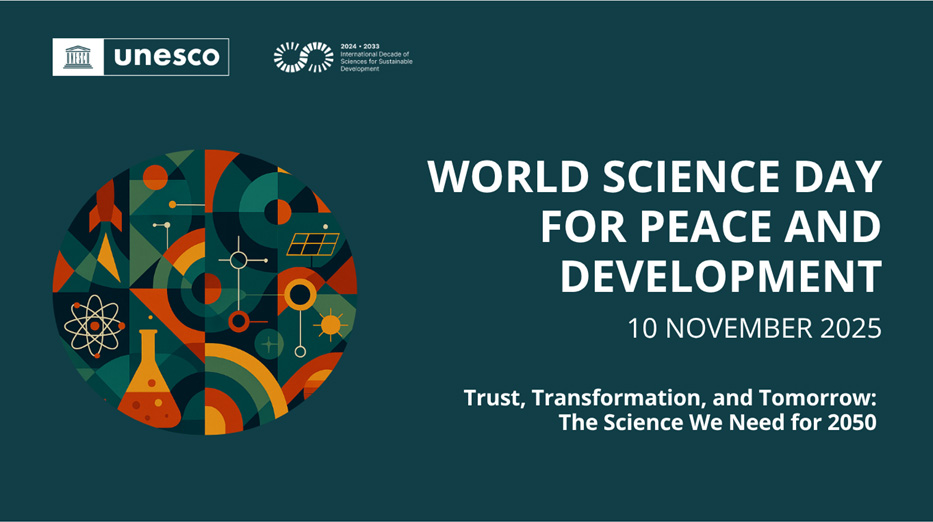
10 November 2025 – In commemoration of World Science Day for Peace and Development, themed “Trust, Transformation and Tomorrow: The Science We Need for 2050”
Introduction
Every year on 10 November, the global community marks World Science Day for Peace and Development, celebrating the central role of science in society and reflecting on how scientific enterprise contributes to peace, sustainable development, and global cooperation. This year’s theme — “Trust, Transformation and Tomorrow: The Science We Need for 2050” — places a spotlight on three inter-linked dimensions: the trustworthiness of science and scientists, the transformation that science must enable in our societies, and the preparation for a future horizon of 2050.
As we reflect on this theme, it is timely to ask: where does Nigeria stand in the global science community? How have we contributed — and how might we further contribute — particularly in the domains of peace-building, sustainability, and global cooperation? What must be done between today and 2050 to ensure that Nigerian science plays its full part?
In this commentary, I outline three parts: (1) Where are we now? (2) Where do we want to be by 2050? (3) How do we get there?
1. Where Are We Now? Nigeria’s Science Contribution and Status
Trust in Science
Trust in science means that the public, institutions, industry, and government believe that scientific processes are credible, transparent, ethical, and socially relevant. In Nigeria, there are positive signals. For example, the Federal Ministry of Innovation, Science and Technology recently affirmed that trust in scientific methodologies and research outcomes is critical for national development. Furthermore, programmes such as the annual “774 Young Nigerian Scientists Presidential Award (774-YONSPA)” seek to stimulate youth interest and bring visibility to scientific effort.
However, challenges remain: public awareness of scientific work, communication of science to citizens, incentives for ethical research, reliable funding, and translation of findings into policy remain weak.
Transformation Through Science: Sustainability and Peace-Building
On the sustainability front, research in Nigeria increasingly addresses issues such as green construction materials, sustainable infrastructure, and technological adoption. Studies on sustainable construction in Nigeria reveal that advanced technologies like Building Information Modelling (BIM) and innovative materials are gaining traction, though hindered by cost, regulatory gaps, and awareness.
On the peace-building front, tertiary institutions and NGOs are engaging with conflict transformation, social justice, and inclusive communication strategies. Several studies highlight how NGOs in Nigeria’s North-Central region have used dialogue, mediation, and local capacity-building to advance peace-building. Other research underscores that social justice, peace, and security are essential bedrocks of sustainable development in Nigeria.
Global Cooperation
Nigeria has also shown engagement with global science networks, though the scale is modest relative to our potential. The science-policy interface is developing, and research outputs are increasing in volume but often remain marginal in global indexing and international visibility. The establishment of national awards such as the Nigeria Prize for Science helps raise profile and encourage excellence.
In summary, Nigeria is making important strides: trust is rising, science is being applied for sustainability and peace, and international engagement is growing — but we are still far from realising the full promise of science for 2050.
2. Where Should We Be by 2050? A Vision for Nigerian Science
By the year 2050, guided by the theme “Trust, Transformation and Tomorrow,” Nigeria should aim to be a country where:
Trust: The science ecosystem is robust, transparent, ethical, publicly engaged, and accountable. Citizens trust research outcomes; policy-makers consult scientific evidence; industry and academia work in partnership; funding and infrastructure are reliable and visible.
Transformation: Science is central to Nigeria’s transformation in key areas — sustainable energy, climate resilience, circular economy, peace-building, and social cohesion. Nigeria should have reduced dependency on fossil fuels, adopted clean renewable technologies at scale, and built resilient infrastructure that bridges rural-urban divides.
Tomorrow: Nigeria plays a meaningful role in global science cooperation, serving as a hub for research in Africa, engaging in large-scale international collaborations, contributing to global challenges such as climate change, food security, and public health, and exporting innovations while nurturing a new generation of STEM professionals.
In concrete terms by 2050, we should expect:
R&D investment reaching at least 1 % of GDP.
A strong pipeline of home-grown innovations transitioning to commercialisation.
Science-education parity across regions and inclusive STEM capacity.
Policy decisions grounded in scientific evidence.
Nigeria as a hub for African-led international research collaborations.
Such a vision aligns with the international dimension of this year’s theme: the science we need for 2050 is global, requires trust, transformation, and tomorrow-oriented thinking.
3. How Do We Get There? Pathways for Nigeria
a) Strengthening Science Infrastructure, Funding, and Institutions
Increase public and private investment in R&D to ensure sustainable funding.
Build modern laboratories, data systems, and research parks nationwide.
Strengthen research institutions and align them with national development goals.
b) Cultivating Trust, Ethics, and Public Engagement in Science
Promote science communication through schools, media, and community outreach.
Embed ethics and transparency in research practice.
Encourage community-based science partnerships to enhance relevance and public trust.
c) Mobilising Science for Sustainability and Peace-Building
Direct research toward renewable energy, climate resilience, and circular economy.
Integrate scientific evidence into conflict-resolution and peace-building strategies.
Mainstream science into national development planning.
d) Building Capacity and Nurturing Talent
Expand STEM education access, particularly for underrepresented groups.
Support early-career researchers through grants and mentorship.
Create technology-transfer mechanisms linking universities with industry.
e) Fostering Global Cooperation
Strengthen participation in international research consortia.
Establish Nigeria-led centres of excellence in science and technology.
Promote open-science collaboration across borders.
f) Monitoring, Evaluation, and Adaptation
Develop measurable science indicators and track national progress.
Evaluate societal impact of scientific programmes.
Adapt policies dynamically as new technologies and global trends emerge.
Conclusion
On this World Science Day for Peace and Development — under the banner “Trust, Transformation and Tomorrow: The Science We Need for 2050” — Nigeria stands at a pivotal moment. We have made meaningful progress in building scientific capacity, integrating science into sustainability and peace-building, and engaging internationally. Yet we must now accelerate our journey, deepen public trust, mobilise transformation at scale, and position ourselves for the scientific challenges and opportunities of 2050.
If we commit to stronger infrastructure, ethical practice, public engagement, talent development, sustainability linkages, peace-science integration, and global cooperation, then by 2050 Nigeria need not be a bystander in science — but a leader in Africa and a valued partner in global scientific enterprise.
Let this day remind us that the science we need for 2050 is not just advanced laboratories or patents — it is trust among citizens and scientists, transformation of our societies, and the shared tomorrow we build through cooperation.
Dr Babajide Gboyega Alalade
AISLT

