

By the Editorial Team of Science and Tech Connect Blog , led by Dr. Babajide Gboyega Alalade
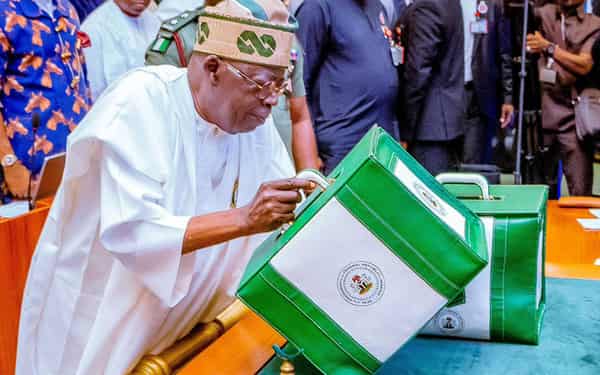
On December 19, 2025, President Bola Ahmed Tinubu presented the 2026 Appropriation Bill, titled the “Budget of Consolidation, Renewed Resilience and Shared Prosperity,” to the National Assembly. With a total expenditure of ₦58.47 trillion, this fiscal plan is designed to lock in economic stability and translate recovery into tangible improvements in the lives of citizens.
This overview, curated by our editorial team, breaks down what the budget means for the critical ecosystems of Science, Engineering, Technology, Innovation (SETI), Health, Agriculture, and Education.
The Big Picture: Fiscal Reform and Strategic Allocation
The 2026 budget is part of a significant fiscal reform aiming to reset Nigeria’s financial calendar. By aligning the fiscal year with the calendar year starting in 2026, the government seeks to eliminate the longstanding problem of overlapping budgets. This move is expected to enhance transparency, improve planning, and boost investor confidence.
The budget is anchored on what analysts call more “realistic” economic assumptions: a crude oil price of $64.85 per barrel, daily production of 1.84 million barrels, and an exchange rate of ₦1,400 to the US dollar. A major focus is on capital expenditure, which is allocated ₦26.08 trillion for infrastructure and development projects, signalling an intent to drive long-term growth.
However, a point of concern remains the high cost of debt servicing, projected at ₦15.52 trillion, which underscores the need for efficient and impactful spending in key sectors.
Sectoral Breakdown: Where the Money is Going
The budget outlines specific allocations for sectors vital to national development. Here is a focused look at the key areas:
· Education
· Allocation: ₦3.52 trillion
· Context & Expectation: This allocation sustains funding for the educational sector. A key highlight is the Nigerian Education Loan Fund (NELFUND), which has already supported over 418,000 students. Citizens can expect continued efforts to improve access to tertiary education through this scheme. For the SETI ecosystem, this is foundational, as a robust education system is the bedrock for producing the next generation of scientists, engineers, and innovators.
· Health
· Allocation: ₦2.48 trillion
· Context & Expectation: The government notes that healthcare spending represents about 6% of the total budget. Furthermore, Nigeria has secured over $500 million in U.S. grant funding for health interventions. Citizens can anticipate targeted investments in health infrastructure and programmes. For science and technology, this opens avenues for applied research in public health, laboratory strengthening, and local pharmaceutical innovation.
· Infrastructure (Including Agriculture & Energy)
· Allocation: ₦3.56 trillion
· Context & Expectation: This broad category is crucial for agriculture, transport, and energy. President Tinubu explicitly described food security as “national security,” pledging investments in mechanisation, irrigation, storage, and agro-processing. Citizens should look for projects aimed at boosting agricultural productivity and reducing post-harvest losses. This sector is ripe for engineering and technological innovation, from renewable energy solutions for rural farms to smart logistics and climate-resilient practices.
· Defence and Security
· Allocation: ₦5.41 trillion
· Context & Expectation: This is the largest sectoral allocation. The President announced a decisive shift in security doctrine, declaring all armed non-state actors as terrorists. Beyond military spending, this has profound implications for other sectors. For instance, a secure environment is a prerequisite for implementing the Safe Schools Initiative. As previously advocated on this platform, the integration of Science, Engineering, and Technology—such as AI surveillance, biometric access, and emergency communication systems—is critical for protecting students and creating a stable environment for learning and innovation.
What This Means for You: A Citizen’s Perspective
1. A Push for Tangible Project Completion: With a focus on capital expenditure (₦26.08 trillion) and an instruction to prioritise completing ongoing projects, citizens should expect to see continued work on critical infrastructure like roads, power, and ports.
2. Accountability and Digital Tracking: The President has directed a full digitisation of revenue mobilisation and warned against leakages. This push for “strict budget discipline” means citizens can, and should, demand greater transparency in how public funds are used.
3. A Foundation for SETI-Led Solutions: While a direct line item for “Science and Technology” is not specified in the available data, the allocations for education, health, agriculture, and infrastructure create the demand and platform for SETI applications. The success of these sectors increasingly depends on homegrown innovation, data analytics, and engineering solutions.
4. The Imperative of Economic Diversification: Experts caution that the budget’s success hinges on moving away from oil dependence. For lasting prosperity, investments must catalyze a structural shift toward a knowledge-based and industrially diversified economy, a vision central to building the “science we need for 2050”.

Conclusion: A Budget Framed by Vision
The 2026 budget arrives at a pivotal moment. It seeks to consolidate recent economic reforms while addressing immediate needs in security, food production, and human capital development.
From the perspective of the Science, Engineering, Technology, and Innovation ecosystem, the budget provides a framework within which our community must actively engage. The tasks are clear: to leverage the allocations in education to build capacity, to use the focus on health and agriculture to drive applied research and technological adoption, and to support the nation’s security and infrastructure goals with innovative solutions.
As noted by our team lead, Dr. Babajide Alalade, and his team, the journey towards 2050 requires that “science is central to Nigeria’s transformation”. The 2026 budget is one step on that path. Its ultimate impact will be determined not just by the figures approved, but by the efficiency of implementation, the commitment to accountability, and the active participation of all stakeholders—policymakers, scientists, private sector, and informed citizens.
What This Means for You: A Citizen’s Perspective
1. A Push for Tangible Project Completion: With a focus on capital expenditure (₦26.08 trillion) and an instruction to prioritise completing ongoing projects, citizens should expect to see continued work on critical infrastructure like roads, power, and ports.
2. Accountability and Digital Tracking: The President has directed a full digitisation of revenue mobilisation and warned against leakages. This push for “strict budget discipline” means citizens can, and should, demand greater transparency in how public funds are used.
3. A Foundation for SETI-Led Solutions: While a direct line item for “Science and Technology” is not specified in the available data, the allocations for education, health, agriculture, and infrastructure create the demand and platform for SETI applications. The success of these sectors increasingly depends on homegrown innovation, data analytics, and engineering solutions.
4. The Imperative of Economic Diversification: Experts caution that the budget’s success hinges on moving away from oil dependence. For lasting prosperity, investments must catalyze a structural shift toward a knowledge-based and industrially diversified economy, a vision central to building the “science we need for 2050”.
Conclusion: A Budget Framed by Vision
The 2026 budget arrives at a pivotal moment. It seeks to consolidate recent economic reforms while addressing immediate needs in security, food production, and human capital development.
From the perspective of the Science, Engineering, Technology, and Innovation ecosystem, the budget provides a framework within which our community must actively engage. The tasks are clear: to leverage the allocations in education to build capacity, to use the focus on health and agriculture to drive applied research and technological adoption, and to support the nation’s security and infrastructure goals with innovative solutions.
As noted by our team lead, Dr. Babajide Alalade, and his team, the journey towards 2050 requires that “science is central to Nigeria’s transformation”. The 2026 budget is one step on that path. Its ultimate impact will be determined not just by the figures approved, but by the efficiency of implementation, the commitment to accountability, and the active participation of all stakeholders—policymakers, scientists, private sector, and informed citizens.
This overview is the first part of our analysis. Our editorial team will publish a detailed, sector-by-sector examination of the opportunities and challenges for the SETI, Health, and Agriculture ecosystems in the coming weeks.