

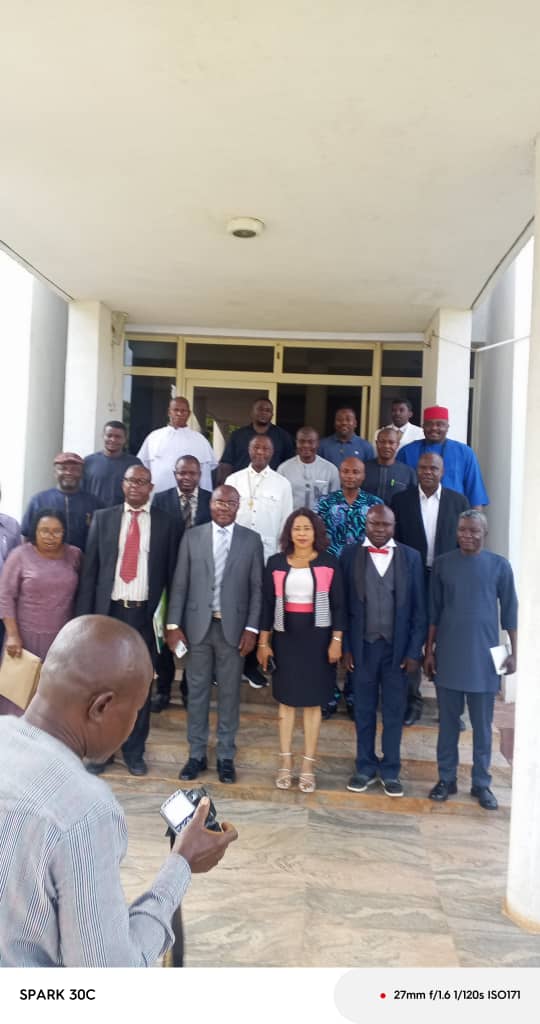
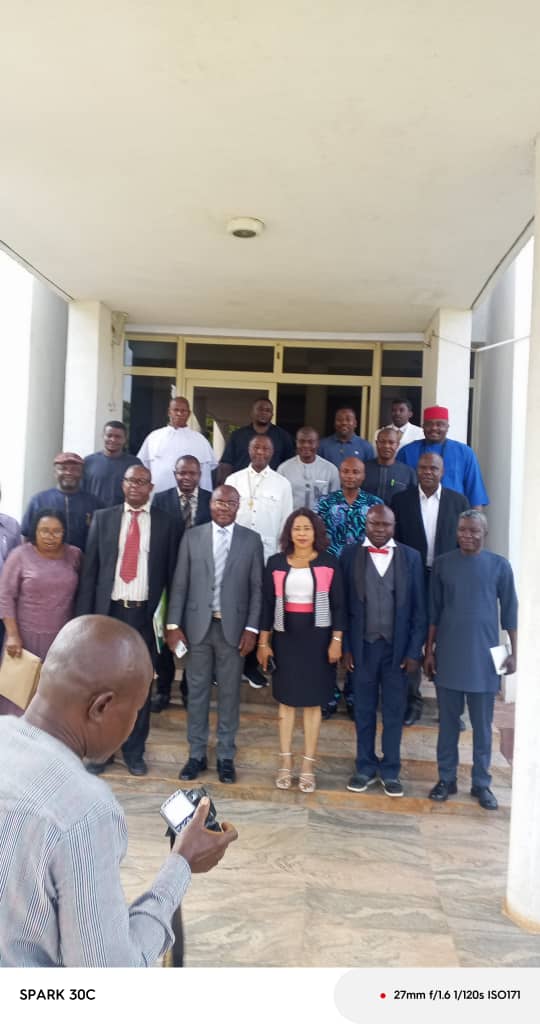
BEING THE PAPER PRESENTED
AT THE 2025 INDUCTION CEREMONY OF GRADUATES OF SCIENCE LABORATORY TECHNOLOGY,
DEPARTMENT OF SCIENCE LABORATORY TECHNOLOGY,
UNIVERSITY OF NIGERIA, NSUKKA,
ON 2ND DECEMBER 2025
BY
ALALADE BABAJIDE GBOYEGA (AISLT)

The main contents of the paper are as follows:
1.Introduction
2.SLT Landscape
3.Traditional Careers
4.Technology Trends
6. Value Addition
7.Conclusion
1 Introduction
Distinguished guests, academic faculty, proud parents and most importantly, our 2025 inductees into the Nigerian Institute of Science Laboratory Technology –
I am profoundly honored to stand before you today as your guest lecturer at this momentous induction ceremony. Today marks a significant professional milestone in your journey as scientists and technologists, a journey that formally transcends academic achievement to embrace professional recognition and responsibility. The theme I have been privileged to address – “Science and Technology: Unravelling Lucrative Career Prospects Through Innovative Value Addition” – has been carefully chosen to illuminate the vast landscape of opportunity that awaits you as newly inducted science laboratory professionals.
In an era defined by rapid technological advancement and evolving economic priorities, the question we must collectively address is straightforward: How does the modern Science Laboratory Technology professional not only navigate but truly thrive in this dynamic environment? The answer, I will argue, lies in strategically positioning yourself at the intersection of fundamental laboratory competence and innovative value addition. Over the course of this presentation, we will explore the evolving scope of Science Laboratory Technology, examine traditional and emerging career pathways, analyze technological trends reshaping our profession, and ultimately develop a framework for creating distinctive value throughout your professional journey. Your training has provided the foundation; today we contemplate the architecture of exceptional careers built upon that foundation.
2 The Expanding Horizon of Science Laboratory Technology
2.1 Defining the Profession and Its Scope
Science Laboratory Technology represents one of Nigeria’s most strategically vital professions with applicability across virtually every sector of our national economy. The Nigerian Institute of Science Laboratory Technology (NISLT), established by Act 12 of 26th June 2003, defines SLT as “the application of scientific principles and techniques to investigate and solve problems in different scientific fields” . This definition, while concise, encompasses a remarkable diversity of specializations including Biology Technology, Biochemistry Technology, Chemistry Technology, Chemical/Petroleum Technology, Geology/Mining Technology, Medical Microbiology, Microbiology/Biotechnology, Physics/Electronics Technology, and Physiology/Pharmacology Technology . This professional breadth underscores a fundamental characteristic of your qualification – its multidisciplinary applicability across the economic landscape.
2.2 Comparative Advantages in the Labor Market
When positioned alongside other laboratory-based professions, Science Laboratory Technology offers distinct competitive advantages in today’s dynamic job market. While often compared with Medical Laboratory Science (MLS), it is crucial to recognize that these represent complementary but distinct professional pathways with different regulatory frameworks – NISLT for SLT professionals and the Medical Laboratory Science Council of Nigeria (MLSCN) for MLS professionals . The strategic advantage of your SLT qualification lies in its remarkable flexibility and broader applicability across multiple sectors beyond healthcare, including environmental science, food science, chemical science, radiation science, and forensic science, among others .
This professional breadth translates into tangible career benefits, including diverse employment options and significant opportunities for research and consultancy. SLT professionals often enjoy greater flexibility in terms of working arrangements, including opportunities for short-term projects and part-time engagements across different settings . This versatility proves particularly valuable in today’s competitive labor market, where adaptability across sectors represents a significant employment advantage. While MLS focuses specifically on human biological samples, your SLT qualification empowers you to work with diverse samples and systems – from environmental samples to industrial materials – significantly expanding your potential employment base beyond the healthcare sector to include manufacturing, energy, education, and environmental management, among others .
3 Traditional Career Pathways for SLT Graduates
The foundational training you have received as Science Laboratory Technologists prepares you for diverse employment opportunities across multiple sectors of the Nigerian economy and beyond. Before we explore the innovative dimensions of value addition, it is essential to recognize the well-established career pathways that have traditionally employed SLT graduates. These conventional routes continue to offer stable career progression and opportunities for professional development while forming the essential ecosystem that employs laboratory science professionals.
3.1 Industry-Based Opportunities
The industrial sector represents one of the most significant employers of Science Laboratory Technology graduates, with particular demand in quality control and assurance roles. In the food and beverage industry, SLT professionals perform crucial functions ensuring products meet regulatory standards, conducting tests for contaminants, and preparing detailed reports for production managers . Major companies like Nestlé, Guinness, and Dangote regularly employ SLT graduates for these essential roles that directly impact product safety and quality . Similarly, the pharmaceutical manufacturing sector depends heavily on SLT professionals for quality control of raw materials and finished products, drug formulation support, and production process monitoring . These roles demand rigorous attention to detail and understanding of analytical techniques – competencies central to your training.
The oil and gas industry offers another significant pathway, particularly for those specializing in Chemical/Petroleum Technology and Chemistry. Within this sector, SLT professionals contribute to biomarker identification, petroleum migration tracing, environmental monitoring, and quality control of petroleum products . The energy and power sector additionally employs SLT graduates in monitoring processes, ensuring fuel quality, and environmental compliance roles . These positions often offer competitive remuneration and opportunities for professional development within some of Nigeria’s most strategically important industries. For those with entrepreneurial aspirations, the industrial sector also presents opportunities to establish private testing laboratories serving multiple industries with specialized analytical services .
3.2 Research and Public Sector Opportunities
The public sector and research institutions represent another major employment domain for SLT graduates, offering opportunities to contribute to national development and scientific advancement. Universities, polytechnics, and research institutes employ SLT professionals as laboratory technologists and research assistants who support academic practical sessions, maintain and calibrate sophisticated equipment, and assist faculty and student research projects . These roles provide intellectually stimulating environments and often serve as springboards for further academic advancement, including postgraduate studies and specialized research.
Various government ministries and agencies also represent significant employers of SLT talent. Opportunities exist within multiple ministries, including Science and Technology, Health, Agriculture, Environment, and Water Resources . Additionally, regulatory agencies such as the National Agency for Food and Drug Administration and Control (NAFDAC), Standard Organization of Nigeria (SON), and environmental protection agencies require the expertise of SLT professionals for standard setting, monitoring, and compliance verification . The emerging public health sector also presents growing opportunities, with organizations like the Nigeria Centre for Disease Control (NCDC) and international health organizations employing laboratory professionals for disease surveillance, outbreak response, and monitoring programs for HIV/AIDS, malaria, and tuberculosis . These roles often combine technical competence with contribution to national health security, offering both professional fulfillment and competitive employment.
4 Technological Innovations Reshaping Laboratory Science
4.1 Automation and Digital Transformation
The global laboratory landscape is experiencing unprecedented transformation driven by technological innovations that are fundamentally altering how laboratory work is conducted. Understanding these trends is not merely academically interesting but essential for strategic career positioning. Laboratory automation represents one of the most significant shifts, revolutionizing traditional laboratory processes across three key stages: pre-analytic, analytic, and post-analytic phases . In the pre-analytic stage, innovations such as barcoded specimen containers, automated specimen preparation, and even robotic transport systems are reducing manual errors and increasing efficiency . The analytic stage has witnessed perhaps the most dramatic advances with multi-analyzer instruments that can measure numerous different analytes simultaneously, consolidated workstations managed by technical staff supervising multiple instruments, and modular automation systems that allow laboratories to customize their automation footprint .
The digital transformation of laboratory science represents an equally profound shift, with information technology revolutionizing data transfer and management. Digital pathology has emerged as a particularly transformative innovation, allowing remote tissue analysis, enhancing collaboration between distant experts, and enabling AI-assisted screening of samples . This technology not only improves diagnostic speed and accuracy but also mitigates staffing challenges by enabling remote work . Similarly, artificial intelligence systems are building knowledge bases within laboratory computer systems, enabling real-time error detection, flagging duplicate or redundant tests, and even recommending follow-on testing based on abnormal results . These AI applications simultaneously reduce costs, decrease errors, and improve patient care – creating new career opportunities at the intersection of laboratory science and data analytics.
4.2 Emerging Technologies and Future Trends
Beyond current automation and digitalization, several emerging technologies promise to further reshape the laboratory science profession in the coming years. Artificial intelligence is increasingly being deployed for predictive analytics in laboratory settings, with systems capable of catching instrument errors as they occur, identifying patterns in complex datasets beyond human perception, and optimizing testing workflows . The integration of Internet-based technologies is creating new possibilities for remote collaboration, tele-laboratory operations, and direct reporting of results to patients . This digital connectivity also facilitates the creation of large datasets that can be mined for insights, potentially accelerating scientific discovery and diagnostic innovation.
The convergence of these technologies is driving the development of increasingly sophisticated laboratory ecosystems characterized by interconnected instruments, centralized data management systems, and remote monitoring capabilities. These systems generate unprecedented amounts of data, creating growing demand for professionals who can bridge the gap between laboratory techniques and data science . For the forward-looking SLT professional, these trends signal a clear trajectory toward technology-integrated practice that will increasingly value digital literacy alongside traditional laboratory competencies. The laboratories that will lead in the coming decades are those successfully integrating these technological innovations while maintaining rigorous quality standards – and the professionals who will thrive are those who embrace these changes as opportunities for value addition rather than threats to traditional practice.
5 Strategies for Innovative Value Addition
5.1 Professional Development and Specialization
In a rapidly evolving professional landscape, strategic career development requires intentional value addition that distinguishes you in the competitive marketplace. The foundation of this approach begins with understanding professional requirements, including the NISLT membership framework that outlines clear pathways for progression from ordinary to corporate membership through the Mandatory Professional Examination . Beyond this essential foundation, targeted specialization in emerging areas represents a powerful value-addition strategy. Fields such as molecular diagnostics, environmental biotechnology, forensic analysis, and laboratory informatics offer specialized niches where demand often exceeds supply . Such specializations may be developed through postgraduate studies, targeted short courses, or on-the-job training in specialized techniques.
The strategic pursuit of certifications beyond your core qualification can significantly enhance your professional profile. Depending on your career interests, these might include certifications in quality management systems (ISO standards), safety management (NEBOSH, HSE), specialized analytical techniques, or even regulatory affairs . For those interested in the educational sector, a Postgraduate Diploma in Education (PGDE) enables teaching roles in secondary and tertiary institutions . Similarly, for SLT graduates interested in diagnostic laboratories, pursuing appropriate certifications can facilitate transition into these regulated spaces . This approach of continuous skill enhancement ensures you remain relevant and competitive throughout your career journey, transforming your basic qualification into a diversified professional portfolio.
5.2 Entrepreneurship and Soft Skills Development
Beyond traditional employment, the entrepreneurial pathway offers substantial opportunities for SLT graduates to create value while building sustainable businesses. Your technical training provides ideal foundation for establishing private testing laboratories specializing in areas such as water quality analysis, food safety testing, environmental monitoring, or chemical analysis . The technical sales and marketing sector also presents entrepreneurial opportunities, with pharmaceutical companies, laboratory equipment suppliers, and chemical manufacturers requiring technically knowledgeable representatives who can effectively communicate with scientific clients . These roles leverage both your technical understanding and communication skills, often offering competitive compensation based on performance.
Perhaps the most underestimated dimension of value addition lies in developing complementary soft skills that enhance your technical competencies. Effective scientific communication – both written and oral – proves essential for writing persuasive grant proposals, creating clear technical reports, and presenting research findings . Collaboration and teamwork skills enable effective participation in multidisciplinary research teams, while problem-solving abilities allow you to troubleshoot laboratory challenges and optimize processes . Unlike technical skills that may become obsolete, these transferable competencies maintain their value across sectoral changes and technological shifts. By consciously developing this balanced portfolio of technical and soft skills, you position yourself not merely as a technician who performs procedures but as a comprehensive professional who contributes to organizational success through multiple dimensions of value creation
.MASTERING GOOGLE TOOLS: A KEY TO UNLOCKING CAREER AND RESEARCH EXCELLENCE IN THE 21ST CENTURY

Google is one of the most influential technology companies in the world, providing digital tools that power communication, research, creativity, and business operations across industries. Its ecosystem—ranging from Gmail, Google Search, Google Scholar, and YouTube to Google Drive, Docs, Sheets, and Google Workspace—has become the backbone of modern information access and productivity. For young graduates, scientists, and researchers, Google products offer a powerful platform for learning, collaboration, data gathering, cloud storage, and global visibility. With Google Scholar, users gain access to millions of peer-reviewed publications, while YouTube serves as the world’s largest learning hub, offering free tutorials, lectures, and practical demonstrations across all disciplines
Mastering Google’s suite of products has become essential for career development and employability in the 21st century. Employers increasingly prefer candidates who can efficiently use digital tools to communicate, analyze information, conduct research, and manage projects. Google tools enhance productivity, support remote work, and enable individuals to create digital portfolios, publish content, collaborate globally, and showcase expertise. For scientists and researchers, the ability to use Google Scholar for literature review, Google Drive for data management, and YouTube for knowledge dissemination significantly improves research quality and visibility. Ultimately, proficiency in Google products positions young professionals to compete favorably in a technology-driven job market and to thrive in a rapidly evolving global economy.
Harnessing Grantsmanship, Scientific Writing, Social Media, Entrepreneurship, and Modern Job Techniques as Strategic Tools for Unlocking 21st-Century Career Opportunities
Young scientists, researchers, and innovators must cultivate strong skills in grants and proposal writing, scientific communication, social media engagement, entrepreneurship, and modern job techniques because these competencies collectively determine their ability to secure opportunities and translate ideas into impactful outcomes. Grants and proposal writing provide access to essential funding that fuels experiments, prototype development, and advanced research. The ability to develop captivating science articles enhances visibility, credibility, and the dissemination of new knowledge, which in turn attracts collaborators, investors, and mentors. Likewise, mastering the use of social media amplifies one’s professional presence, enabling young scientists to share discoveries widely, engage global communities, and access networks that would otherwise remain out of reach.
Additionally, entrepreneurship skills and knowledge of modern job requirements empower young innovators to transform scientific concepts into market-ready solutions that create value and open lucrative career paths. With industries rapidly evolving due to digital transformation, competence in emerging tools, workplace technologies, and innovation-driven methodologies becomes essential for relevance and competitiveness. By building capacity in these areas, young scientists are better positioned to identify unmet societal needs, design value-added products or services, successfully pitch their innovations, and navigate interdisciplinary environments. Ultimately, these skills enable them to harness science and technology as powerful engines for career advancement, economic empowerment, and sustainable development
Essential eBook Toolkit for Young Scientists and Innovators: Your Recommended Guides to Accelerate Skills, Innovation, and Career Success
HOW TO GET ANY OR ALL OF THE eBooks, today without delay
Go to or click
https/selar.com/science-techconnect1
To accelerate growth and unlock greater career prospects, young scientists, researchers, and innovators are strongly encouraged to obtain copies of the following eBooks, each designed as a catalyst for professional advancement. Proposal and Grant Writing Secrets will equip them with practical techniques for crafting winning proposals that attract funding, while A Guide to Writing and Earning Cool Cash from Writing Science Articles and Technical Reports on the Internet opens pathways for monetizing scientific knowledge from anywhere. Those seeking to commercialize ideas will find Entrepreneurship Secrets for Engineers and Scientists invaluable for building sustainable ventures without abandoning their core professions. For individuals pursuing competitive roles, Dream Job Hunting Secrets for Scientists and Engineers offers modern strategies for positioning themselves for high-impact jobs, and Social Media Success Secrets for Engineers and Scientists provides the tools needed to build a powerful online professional brand. Collectively, these resources serve as practical handbooks to strengthen competencies, inspire innovation, and propel young talents toward fulfilling, lucrative careers in science and technology.
6 Conclusion
As we bring this presentation to a close, I wish to return to our central theme: unravelling lucrative career prospects through innovative value addition. Our exploration has taken us through the expansive professional landscape of Science Laboratory Technology, examined traditional and emerging career pathways, analyzed transformative technological trends, and finally considered strategic approaches to professional value addition. The consistent thread throughout this discussion has been that your core technical training represents not a destination but a foundation upon which exceptional careers can be built through intentional value addition. The convergence of your professional qualification with today’s induction into NISLT creates a powerful launch platform for careers of impact, influence, and personal fulfillment.
The future of laboratory science in Nigeria presents both significant challenges and unprecedented opportunities. As our national economy continues to diversify and technological adoption accelerates, the demand for skilled laboratory professionals across sectors will only intensify. This reality positions you, today’s inductees, at a uniquely advantageous historical moment. Your professional success will depend not merely on the technical competence you have already acquired but on your continued ability to anticipate market needs, adapt to technological changes, and consistently add value throughout your professional journey. I challenge you to approach your careers not as predetermined pathways but as dynamic creations that you actively shape through continuous learning, strategic positioning, and innovative thinking.
In conclusion, I congratulate you once again on this significant professional milestone. You stand today as the newest members of a vital profession that contributes to virtually every sector of our national life. Carry this privilege with the seriousness it deserves, but also with the excitement of recognizing the diverse opportunities before you. May your careers be marked by continuous growth, meaningful contributions, and the professional fulfillment that comes from excellence in a field central to human progress and national development. Thank you for your attention, and I wish you every success in your professional journey
ahead.