

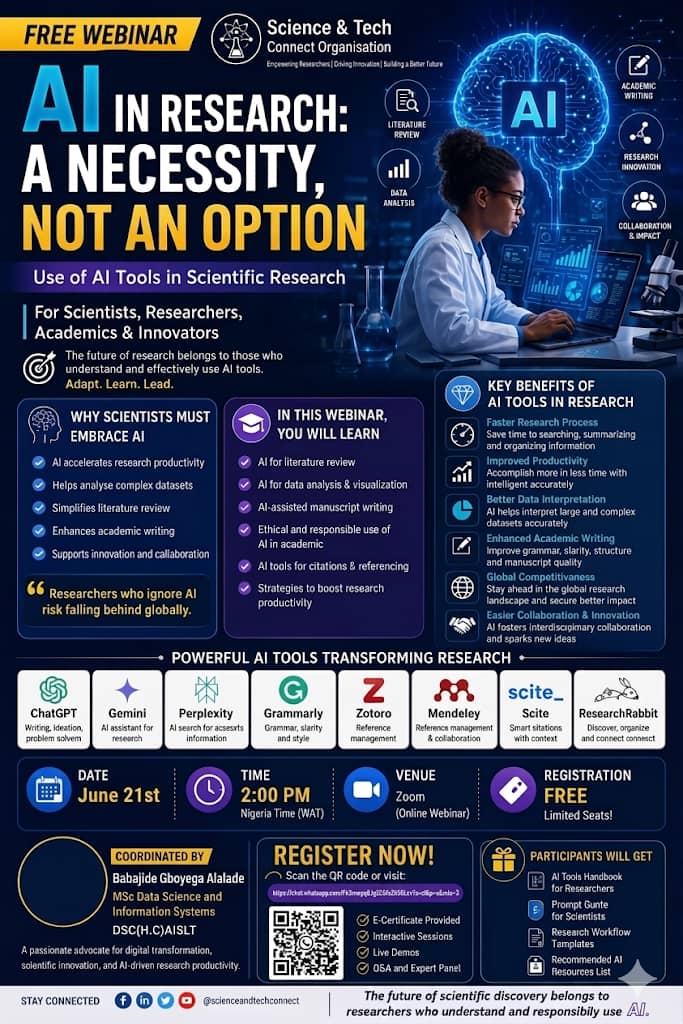
Science and Tech Connect Champions AI Literacy in Research, Sets Target to Train 1,000 Professionals
June 22, 2026 – Science and Tech Connect (S&T Connect), a leading science and technology advocacy organization, successfully concluded a webinar titled “Artificial Intelligence Tools in Research” on June 21, 2026. The virtual event brought together researchers, educators, and innovators to explore how Artificial Intelligence is revolutionizing scientific discovery and academic productivity.
Led by S&T Connect founder and facilitator Dr Babajide Gboyega Alalade(AISLT). the webinar provided attendees with practical insights into the top AI tools for 2026, alongside advanced techniques in prompt engineering. Participants were guided through the “Ten Golden Rules for AI-Assisted Research,” which emphasize the importance of maintaining scientific rigor, verifying AI-generated outputs, and upholding ethical standards.
“The integration of AI into research is no longer an option but a necessity,” said . Alalade. “Our mission is to ensure that researchers and innovators are empowered to use these tools responsibly to solve societal challenges and advance sustainable development”.
A central highlight of the event was the robust dialogue surrounding the ethics and accessibility of AI. Participants voiced a strong commitment to the democratization of AI, urging for solutions that are both affordable and accessible to researchers at all levels. In direct response to this need, S&T Connect confirmed that the webinar marks the beginning of a sustained training initiative, with a strategic goal to empower 1,000 people with AI proficiency by the end of 2026.
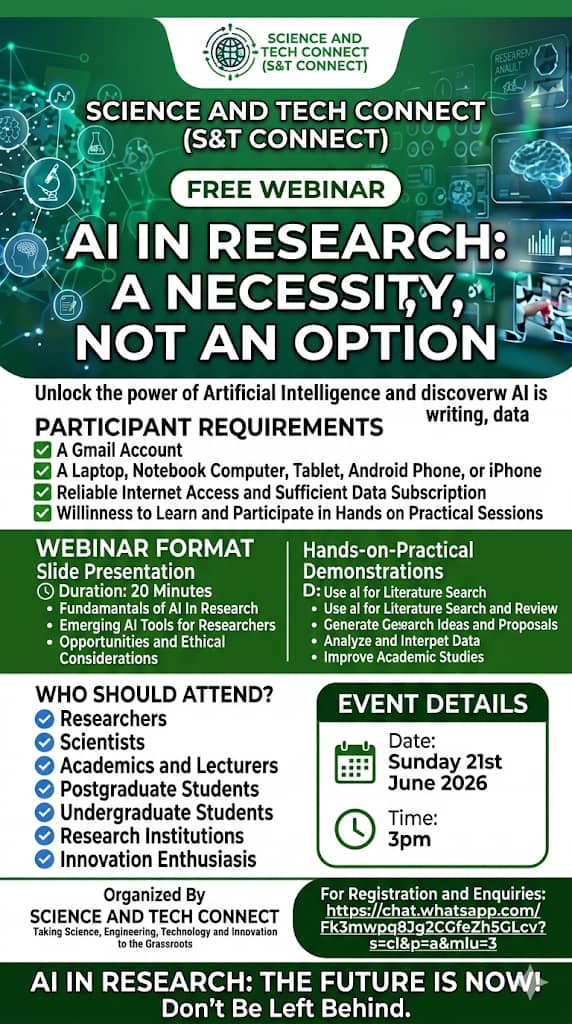
Report: Webinar on Artificial Intelligence Tools in Research
Date of Event: June 21, 2026
Organizer: Science and Tech Connect (S&T Connect)
Facilitator: Dr Babajide Gboyega Alalade (AISLY), Founder of S&T Connect
Subject: Artificial Intelligence Tools in Research
Overview
On June 21, 2026, Science and Tech Connect (S&T Connect) hosted a successful webinar focused on the integration of Artificial Intelligence (AI) into research workflows. The session, facilitated by Babajide Gboyega Alalade, aimed to equip researchers, students, educators, and innovators with the practical skills needed to leverage AI effectively in the digital age.
Key Themes and Discussions
The webinar addressed the transformative role of AI in research, covering the entire research lifecycle from literature discovery to academic writing. Key takeaways from the session included:
AI as a Partner: The facilitator emphasized that AI should be utilized as a powerful assistant to augment human intelligence—handling repetitive tasks and analyzing complex data—rather than as a replacement for human creativity and critical thinking.
Prompt Engineering: A significant portion of the training focused on “Prompt Engineering,” described as a vital skill for guiding AI systems to produce high-quality, relevant results. Attendees learned about roles, context, task specification, and output formatting as essential components of effective prompting.
Ethical Considerations: Participants raised important concerns regarding the responsible use of AI. The discussion highlighted the need for academic integrity, data privacy, the verification of AI-generated outputs, and the avoidance of plagiarism.
Participant Feedback and Future Outlook
The session saw active engagement from participants, who strongly advocated for the
democratization of AI tools. There was a clear consensus among attendees that AI resources must be made both available and affordable to a wider user base to ensure equitable access to these technologies.
Addressing these concerns, the facilitator announced that this webinar is the first in a series of continuous capacity-building programs. The organization has set an ambitious goal to train 1,000 individuals in AI applications for research and prompt engineering before the end of 2026.

