

By Science & Tech Connect Editorial Team
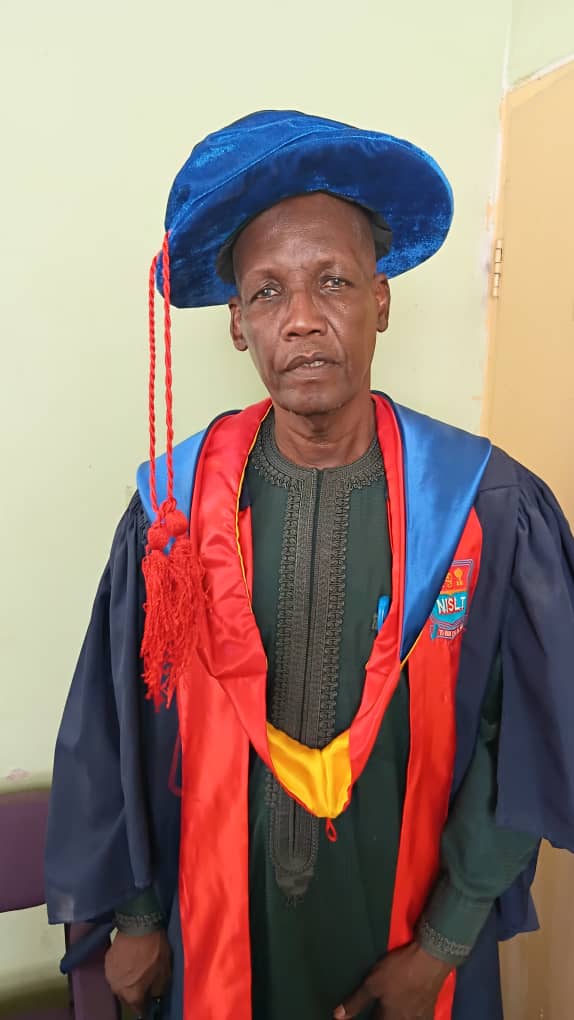

In a country where the stories of scientists, technologists and technical professionals often remain hidden behind the walls of laboratories, workshops and academic institutions, the life of Engr. Kaka Mallam Kaigama, FISLT, offers a remarkable and inspiring exception.
His is a story of professional excellence, mentorship, institutional service and community leadership—a journey that has taken him from engineering workshops and university laboratories to the traditional leadership structure of Borno State.
For more than four decades, Engr. Kaigama has built a career around a simple but powerful principle: knowledge is most valuable when it is used in the service of humanity.
A veteran Science Laboratory Technologist, Mechanical Engineering Technologist, administrator, professional leader, mentor and traditional ruler, he represents a rare blend of technical expertise and community responsibility. His career demonstrates that the influence of a technologist does not have to end at the laboratory door. Rather, technical knowledge, discipline, integrity and innovation can become powerful instruments for shaping institutions, mentoring future leaders and strengthening communities.
It is against this background that Science & Tech Connect Blog presents Engr. Kaka Mallam Kaigama as part of its special personality feature series—an initiative designed to celebrate Nigerians whose professional contributions and personal values continue to inspire progress in science, technology, education and society.
A Career Built on Technical Excellence
Engr. Kaigama’s professional journey is one of perseverance, continuous learning and commitment to technical education.
His academic foundation began with a National Diploma in Mechanical Engineering from Ramat Polytechnic, Maiduguri, which provided him with the technical grounding necessary for a career in engineering and technology. He later advanced his professional qualifications by obtaining the prestigious NISLT Final Diploma in Science Laboratory Technology from the University of Maiduguri in 1990.
That combination of engineering and science laboratory training would become a defining feature of his professional identity.
Over the course of more than four decades at the University of Maiduguri, Engr. Kaigama has distinguished himself as a highly experienced technologist whose responsibilities have extended beyond routine technical operations to include equipment maintenance, workshop management, practical training and institutional support for teaching and research.
He currently serves as Deputy Director Technologist in the Department of Mechanical Engineering, Faculty of Engineering, University of Maiduguri. He also coordinates the Equipment Maintenance Centre (EMC) and heads the Engineering Teaching Workshop.
These responsibilities place him in critical positions within the university’s technical and educational ecosystem.
In modern universities, the success of engineering and scientific education depends not only on lecturers and researchers but also on the availability, functionality and proper management of laboratories, workshops, machines and scientific equipment. Technologists are therefore essential to translating theoretical knowledge into practical skills.
Engr. Kaigama’s work reflects this often-underappreciated dimension of higher education. Through equipment maintenance, technical supervision, workshop coordination and practical training, he has contributed to creating an environment where students can acquire the hands-on competencies required to become effective professionals.
His career is, therefore, a reminder that technology development is not driven solely by inventions; it is also sustained by the professionals who operate, maintain, manage and transfer technical knowledge from one generation to another.
The Mentor Behind the Leaders
Perhaps the most enduring measure of Engr. Kaigama’s impact is not found in the positions he has occupied but in the people he has influenced.
For decades, students and young professionals have encountered him in laboratories, engineering workshops and technical learning environments. Many came to these spaces as students seeking academic qualifications; they left with practical knowledge, professional discipline and lessons that would continue to influence their careers.
This is the quiet power of mentorship.
While public attention often focuses on prominent political leaders, academics, business executives and other personalities who occupy visible positions, the individuals who helped shape them are frequently overlooked.
Engr. Kaigama belongs to that important category of nation-builders who work behind the scenes.
During his long years of service at the University of Maiduguri, he has mentored and interacted with generations of students who have gone on to pursue careers in government, politics, academia, engineering, science, business and public administration.
Among the prominent personalities associated with the University of Maiduguri during the period of his professional service is the current Governor of Borno State, Professor Babagana Umara Zulum. His story, alongside those of other accomplished Nigerians who passed through the institution, underscores the broader contribution of university technologists and technical professionals to the development of human capital.
Whether or not their names appear in history books, professionals such as Engr. Kaigama play an important role in preparing the people who eventually occupy the nation’s most influential positions.
The lesson is profound: sometimes, the greatest leaders are those who help others become leaders.
Championing the Science Laboratory Technology Profession
Engr. Kaigama’s commitment to professional development extends beyond his university responsibilities.
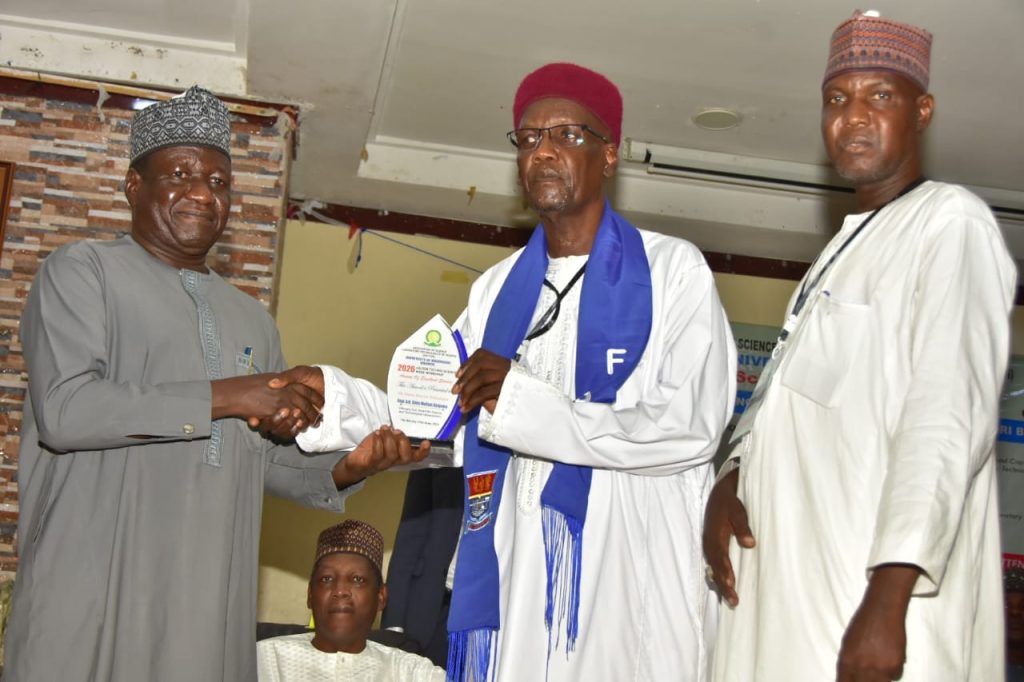
His dedication to Science Laboratory Technology earned him recognition as an Associate Member of the Nigerian Institute of Science Laboratory Technology (NISLT) in 2001. His contributions to the profession were further recognised with his elevation to the prestigious status of Fellow of the Nigerian Institute of Science Laboratory Technology (FISLT) in 2016.
For a profession that plays a critical role in scientific research, education, industrial development, environmental monitoring and technological advancement, professional leadership is essential.
Science Laboratory Technologists operate at the intersection of scientific knowledge and practical application. They support the functioning of laboratories, maintain equipment, assist in experimental procedures, promote safety standards and contribute to the generation of reliable scientific data.
In Nigeria’s drive toward a knowledge-based economy, the relevance of this profession cannot be overstated.
Engr. Kaigama has contributed to the advancement of the profession through his involvement in professional associations and institutional leadership. His service includes roles such as:
- National Treasurer of the Association of Science Laboratory Technologists of Nigeria (ASLTON);
- Governing Council Member representing the North-East Zone;
- Chairman of the NAAT University of Maiduguri Branch; and
- Active participant and contributor to national conferences, workshops, seminars and professional development programmes.
Through these platforms, he has advocated for professional growth, improved technical standards, ethical practice, capacity development and the recognition of technologists as critical partners in national scientific and technological development.
His professional journey also illustrates an important reality: the advancement of science in Nigeria requires a strong technical workforce capable of supporting researchers, educators, industries and institutions.
When Science Meets Traditional Leadership
If Engr. Kaigama’s professional career tells the story of technical excellence, his traditional leadership role adds another remarkable dimension to his life.
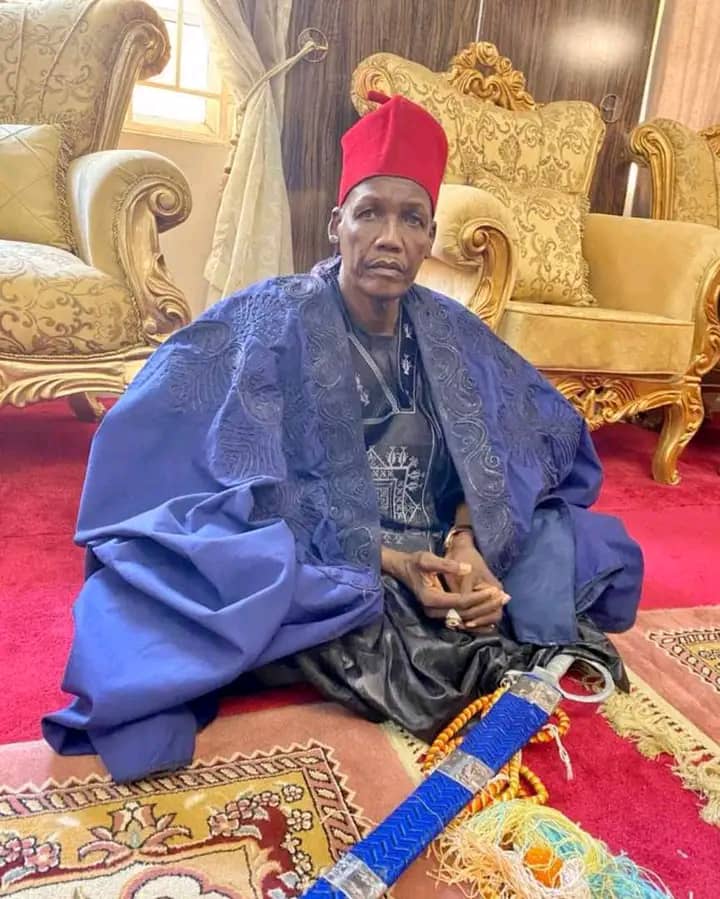
His appointment and service as the District Head of Soye under the Bama Emirate Council demonstrate the confidence and trust placed in him by his community.
The transition from university laboratories and engineering workshops to traditional leadership may appear unusual at first glance. Yet, on closer examination, the connection is clear.
Both science and effective leadership require discipline, evidence-based thinking, accountability, problem-solving and a commitment to the common good.
As District Head, Engr. Kaigama has the opportunity to bring these values into community leadership while respecting the cultural traditions and institutions that define his people.
His role represents a bridge between two worlds that are sometimes wrongly viewed as separate: modern scientific and technical knowledge on one hand, and traditional institutions and community wisdom on the other.
In reality, both can complement each other.
Traditional institutions remain important channels for community mobilisation, conflict resolution, cultural preservation and grassroots development. At the same time, modern science and technology provide tools for addressing challenges in areas such as education, health, water, sanitation, agriculture, environmental sustainability and infrastructure.
The future of many Nigerian communities may depend on finding effective ways to connect these two spheres.
Engr. Kaigama’s journey provides an example of how a technically trained professional can contribute to that connection.
His traditional leadership responsibilities also highlight the broader role of community leaders in promoting peace, encouraging social cohesion, supporting development initiatives and preserving cultural values. In a region that has faced significant social and developmental challenges, responsible leadership and community trust remain indispensable assets.
A Bridge Between Generations
One of the most compelling features of Engr. Kaigama’s story is his ability to connect generations.
He belongs to a generation of professionals who built their careers during a period when Nigeria’s scientific and technological institutions were still developing their foundations. Yet, rather than simply preserving the knowledge of his generation, he has spent much of his career transferring knowledge and experience to younger people.
This generational responsibility is particularly important today.
Nigeria’s growing population, expanding digital economy and increasing demand for innovation require a new generation of scientists, engineers, technologists and entrepreneurs who can solve problems creatively and responsibly.
Mentors like Engr. Kaigama provide an important link between experience and innovation.
The younger generation brings new ideas, digital skills and technological possibilities, while experienced professionals provide institutional memory, practical wisdom and lessons learned through decades of service.
When these strengths come together, the result can be a more resilient and innovative society.
A Legacy That Goes Beyond Titles
Engr. Kaigama’s story is ultimately not about titles.
It is not simply about being a Deputy Director Technologist, a Fellow of NISLT, a professional association leader or a District Head.
It is about the cumulative impact of a life devoted to service.
Across the laboratory, the engineering workshop, the university, professional associations and the traditional institution, the same values appear repeatedly: discipline, competence, mentorship, responsibility and service to others.
That consistency is perhaps the strongest measure of his legacy.
In an era when professional success is often measured by personal achievement, wealth or public visibility, Engr. Kaigama’s journey offers a different definition of success.
It suggests that a meaningful career is one that leaves behind stronger institutions, better-trained professionals, inspired young people and communities that are better positioned to face the future.
The Larger Lesson for Nigeria
Nigeria’s quest for technological advancement requires more than policies and infrastructure. It requires people who are willing to build institutions, maintain professional standards, mentor young people and connect knowledge to real-world problems.
The country needs more professionals who understand that science and technology are not isolated disciplines but tools for improving human lives.
It also needs stronger collaboration between universities, professional bodies, industries, government institutions and traditional communities.
The experience of Engr. Kaigama demonstrates the potential that exists when professional knowledge is combined with leadership and community engagement.
His journey challenges the traditional image of the technologist as someone who works quietly behind laboratory benches or machines. Instead, it presents the technologist as an educator, mentor, administrator, innovator, community leader and nation-builder.
At a time when Nigeria is seeking to strengthen its scientific and technological capacity, the contributions of such professionals deserve greater recognition.
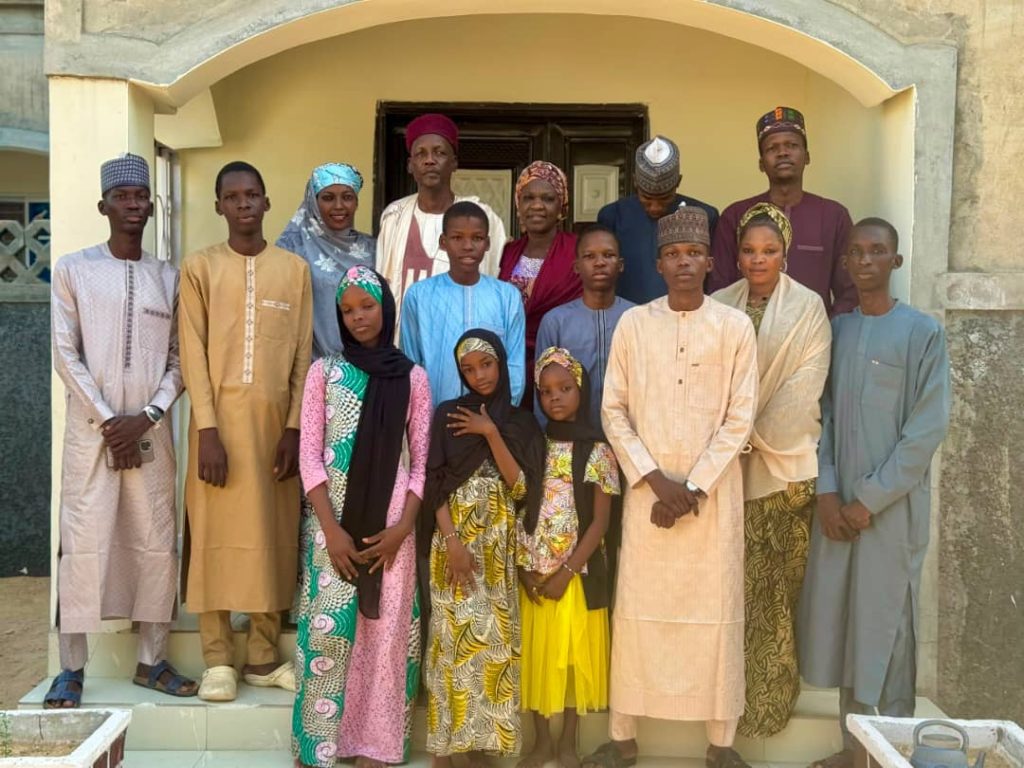
A Life of Quiet Excellence, A Legacy of Lasting Influence
Engr. Kaka Mallam Kaigama, FISLT, represents a generation of Nigerian professionals whose contributions may not always attract the headlines but whose influence can be felt across institutions and communities.
From his early training in Mechanical Engineering to his professional qualification in Science Laboratory Technology; from decades of service at the University of Maiduguri to his leadership in professional organisations; from mentoring generations of students to serving as District Head of Soye, his journey reflects the many dimensions of purposeful leadership.
He is, in equal measure, a technologist, mentor, institution builder, professional leader and traditional leader.
More importantly, he embodies the idea that knowledge becomes truly powerful when it is transformed into service.
As Nigeria looks toward a future shaped by science, technology, innovation and digital transformation, the country will need professionals who can bridge the gap between knowledge and society, between institutions and communities, and between generations.
Engr. Kaigama’s life offers a compelling example of such a bridge.
His story is not merely a celebration of one man’s professional achievements. It is a reminder of the often-unseen army of technologists, technicians, educators and mentors whose daily work helps keep institutions functioning and prepares the next generation to lead.
For Engr. Kaka Mallam Kaigama, science and technology have never been merely about machines, laboratories or technical procedures. They have been instruments of service, mentorship, leadership and nation-building.
And perhaps that is the most enduring lesson of his remarkable journey: the true measure of a professional’s legacy is not only what he achieves, but also the lives he touches, the institutions he strengthens and the generations he inspires.
.

