Interview Title:
“Science, Service & Leadership: The Dr. (Mrs) M. M. Adeyanju Story”
Preamble:
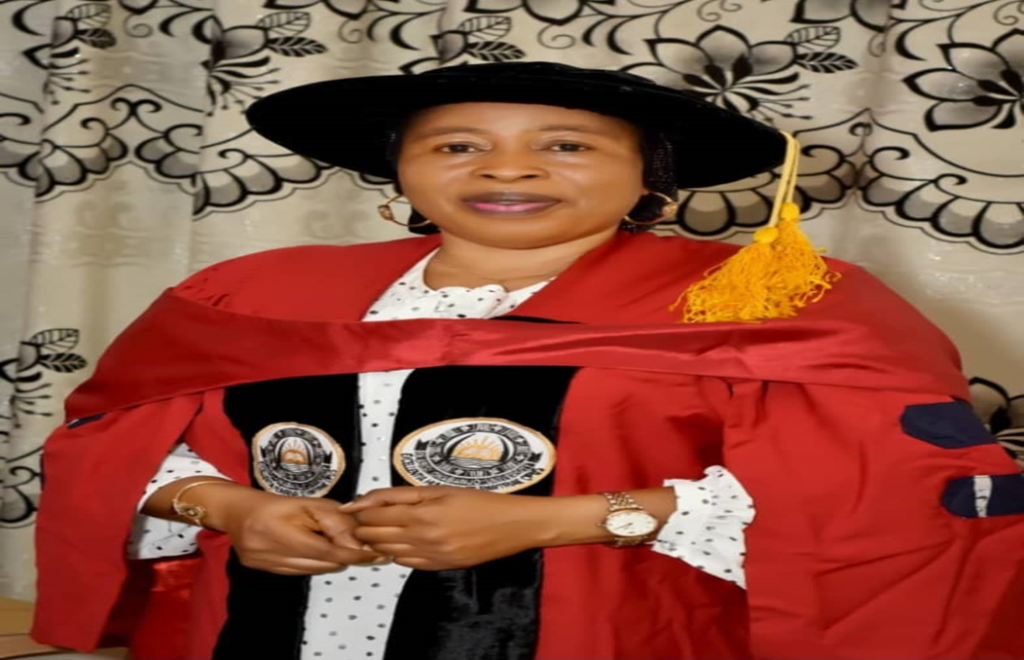
In this edition of Science and Tech Connect Blog Interview Session, we spotlight Dr. (Mrs.) M. M. Adeyanju—Associate Professor of Biochemistry and Head of Forensic Science at Olabisi Onabanjo University, Ago-Iwoye, Ogun State. For over two decades, she has combined groundbreaking research in enzyme biotechnology and food innovation with a passion for teaching, mentorship, and leadership. A trailblazer for women in science and a champion of youth empowerment, Dr. Adeyanju’s story is one of resilience, impact, and vision for the future of biochemistry and science education in Nigeria.
Interview Questions
Career Journey & Inspiration
- S&T Team : You have been in academia for over two decades. What inspired you to pursue a career in biochemistry, and how has your journey evolved since joining Olabisi Onabanjo University in 2001?
My career in biochemistry stems from a passion for understanding life’s molecular basis and applying it to health, agriculture, and industry. Since joining Olabisi Onabanjo University in 2001, I have advanced through teaching, research, and leadership, with interests in enzyme biotechnology, food innovation, forensic science, and quality assurance. My work spans curriculum development, mentorship, and institutional strengthening, reflecting a two-decade journey from laboratory research to integrated scholarship, innovation, and leadership.
2. S&T Team:Looking back, what were the most defining moments in your academic and professional career that shaped the leader and researcher you are today?
Since joining academia, I have contributed to teaching, research, and leadership, with several defining moments shaping my journey. Choosing biochemistry provided a strong foundation for understanding life processes and their applications, while joining Olabisi Onabanjo University in 2001 offered a platform to combine teaching, research, and service. Transitioning from researcher to leader expanded my role into quality assurance, curriculum development, and governance, strengthening institutional systems. Mentoring young scientists and supervising postgraduate work deepened my commitment to capacity building. My research further shaped my identity, extending scholarship beyond theory to societal relevance, fostering a leadership style rooted in rigor, collaboration, and service.
- S&T Team : As a woman in science and academia, what unique challenges did you face, and how did you overcome them?
As a woman in science, I have encountered challenges ranging from system-level barriers to societal norms and expectations, particularly the need to balance professional responsibilities with cultural expectations around family and caregiving. Early in my career, proving competence required extra effort, while navigating gender bias meant asserting my voice and value in competitive spaces. Limited access to opportunities further tested resilience. I overcame these barriers through mentorship, supportive networks, and excellence in teaching, research, and leadership. Mentoring younger women became central to my journey. These experiences, though demanding, shaped me into a leader committed to personal excellence, inclusivity, and advancing equity within academia.
Teaching & Mentorship
- S&T Team : You have taught a wide range of biochemistry and medical courses. What teaching philosophy guides your classroom approach, and how do you keep students engaged in such a complex discipline?
My teaching philosophy is to make biochemistry meaningful by linking molecular processes to real-life applications. In teaching Protein and Amino Acid Metabolism, I emphasize clinical relevance, such as metabolic disorders like phenylketonuria, alongside industrial uses, including microbial fermentation and protein engineering. This dual perspective engages students by showing biochemistry’s impact beyond exams. I reinforce learning through case studies, problem-based tasks, and discussions that integrate health and industrial contexts. By positioning biochemistry as both foundational science and driver of innovation, I foster curiosity, critical thinking, and motivation, encouraging students to actively connect theory with practice.
5. S&T Team : Many of your students have gone on to successful careers. Could you share a mentorship experience that left a lasting impression on you?
Mentorship is one of the most fulfilling aspects of my career, and I take pride in seeing students excel beyond the classroom. A memorable example is a student who recently earned a fully funded PhD scholarship at the University of Kansas. Recognizing his curiosity early, I guided him in refining his research interests, building skills, and preparing competitive applications. Watching his growth from eager learner to confident scholar was deeply rewarding. His success reaffirmed my belief that mentorship is about more than knowledge—it is about inspiring confidence, nurturing potential, and shaping the next generation of scientists and leaders.
Research & Innovation
6. S&T Team : Your research covers enzymology, nutrition, proteomics, andfermentation technology. Which of your completed studies do you consider most impactful for public health in Nigeria, and why?
Among my studies, I consider my work on enzyme applications in food and fermentation technology especially impactful for public health in Nigeria. One project explored using locally sourced microbial enzymes to enhance the nutritional quality and safety of fermented foods, improving protein digestibility, reducing anti-nutritional factors, and increasing micronutrient bioavailability. This addressed malnutrition and food insecurity with culturally acceptable, affordable solutions. Additionally, my work in nutritional biochemistry and proteomics—examining amino acid metabolism and protein quality—has advanced understanding of diet and health. Collectively, these studies bridge scientific discovery and societal need, offering sustainable strategies to improve nutrition and health outcomes.

7. S&T Team : You are currently working on enzyme purification from ant-lion larvae and on sorghum-based liquor. What excites you most about these projects, and what real-world applications do you foresee?
What excites me most about my current projects is their potential to expand knowledge while addressing practical challenges. In studying enzyme purification from ant-lion larvae, I am exploring novel enzymes with unique catalytic properties, offering applications in biodegradation, drug development, and industrial bioprocesses. This work broadens enzyme diversity and deepens understanding of insect biochemistry. Likewise, my research on sorghum-based liquor optimizes fermentation to enhance quality, safety, and value. With sorghum’s resilience and cultural importance, the project supports food security, nutrition, and local industry, while promoting economic empowerment and healthier, locally produced alternatives to imported beverages.
What I find most rewarding is that both projects demonstrate how biochemistry can serve as a bridge between fundamental science and societal benefit—whether by uncovering novel enzymes with industrial potential or by enhancing the nutritional and economic value of indigenous crops.
8 S&T Team :. With over 30 peer-reviewed publications, how do you ensure that your research remains relevant to both local and global health challenges?
My research is guided by the principle that science must address real needs. In Nigeria and Africa, malnutrition, food insecurity, and limited access to health technologies remain pressing, so I focus on locally available resources—such as sorghum and enzymes from underutilized organisms—to create sustainable, affordable solutions. At the same time, I align my work with global health priorities, contributing to knowledge in enzyme applications, proteomics, and nutritional biochemistry. Interdisciplinary collaboration ensures rigor and practical relevance, while attention to emerging issues like antimicrobial resistance and climate-driven food insecurity keeps my research responsive. This balance sustains both local impact and global relevance.
Leadership & Administration
9. S&T Team : You have served in several administrative capacities, including Sub-Dean, Acting Head of Department, and Chair of Quality Assurance Committees. How do you balance academic research with these leadership roles?
Balancing academic research with leadership roles has been one of the most important aspects of my career development. I see administration not as a distraction from scholarship, but as an extension of academic responsibility—a way to create an environment where both faculty and students can thrive.
My balance between research and leadership rests on three strategies. First, I practice effective time management, setting priorities and delegating tasks to ensure neither role is neglected. Second, I see leadership as an extension of scholarship; in roles such as Sub-Dean, Acting Head of Department, and Quality Assurance Chair, I strengthened curricula, promoted research culture, and upheld standards while gaining insights for new research. Finally, mentorship and teamwork sustain momentum, engaging colleagues and students in projects. Ultimately, I view teaching, research, and leadership as interconnected pillars, each enriching and reinforcing the other in my academic journey.
10. S&T Team : From your experience in curriculum development and quality assurance, what strategies do you believe are most effective for improving the quality of science education in Nigerian universities?
My experience in curriculum development and quality assurance has shown me that strengthening science education in Nigerian universities requires relevant curricula, robust quality assurance systems, and sustained capacity building. At Olabisi Onabanjo University, I have applied these strategies with tangible results, helping to shape a vision of producing graduates who are not only globally competitive but also equipped to make meaningful local impact.
National & Global Engagement
11. S&T Team : You have participated in international conferences and advanced trainings in the US and Germany. How have these global exposures influenced your research and teaching in Nigeria?
Participating in international conferences and advanced trainings in the United States and Germany has greatly enriched my research and teaching. These experiences broadened my exposure to cutting-edge science, innovative teaching methods, and global perspectives, which I have contextualized for application in Nigeria. Interactions with leading researchers refined my methodologies and inspired collaborations, enabling me to integrate advanced techniques in enzyme purification and protein analysis into work addressing local nutritional and health challenges. Most importantly, they reinforced my conviction that Nigerian science must be globally competitive yet locally relevant.
12. S&T Team : You have also contributed to community development, particularly in youth empowerment and food fermentation. How important is it for academics to translate their research into community impact?
I believe academics must translate research into tangible community impact, as universities are part of the societies they serve. Research should go beyond publications to address real challenges. In my work, studies on food fermentation have aided local processors in improving food quality, safety, and income generation. My involvement in youth empowerment has equipped young people with science-based entrepreneurial skills, particularly in food innovation and small-scale industries. These efforts show how expertise can drive employment, health, and sustainability. Knowledge has its highest value when applied to human development, ensuring science remains relevant, inclusive, and transformative for Nigeria.
Personal Reflections & Future Vision
13. S&T Team : Beyond your academic work, you have played active roles in professional associations such as NSBMB and ASBMB. How have these platforms enriched your career and opened opportunities for collaboration?
These associations serve as bridges between local relevance and global engagement. They have expanded my professional network, opened doors for interdisciplinary partnerships, and reinforced my commitment to advancing biochemistry as both a science and a tool for societal development.
14. S&T Team : Balancing family, faith, and a demanding academic career is no small feat. How have your personal values shaped your professional journey?
Balancing family, faith, and a demanding academic career has required intentional effort, and my personal values have been central to navigating that journey. Faith has always given me resilience and perspective, reminding me that my work is part of a larger purpose. One memorable period was during my postgraduate studies, when I faced setbacks in my research that could easily have discouraged me. It was my faith that gave me the strength to persevere, and that same experience now shapes how I encourage students when they encounter difficulties in their own research journeys.
Family has also been a constant source of strength and motivation. I recall times when administrative duties and research deadlines overlapped, creating immense pressure. Having the support and understanding of my family allowed me to remain focused and productive without losing sight of what matters most. That balance has influenced my mentorship style—I remind younger academics and students that while excellence is important, personal well-being and relationships must not be neglected.
Finally, my core values of discipline, integrity, and service have guided how I approach my professional responsibilities. Whether in teaching, research, or administration, I strive to uphold excellence while remaining approachable and supportive. These values remind me that my career is not only about personal achievement but about purpose, impact and leaving a legacy of service.
15. S&T Team : Finally, what is your vision for the future of biochemistry and science education in Nigeria, and how do you see yourself contributing to that vision in the coming years?
My vision for the future of biochemistry and science education in Nigeria is to position the discipline as a catalyst for national development, especially in public health, food security, and biotechnology. I believe education must be research-driven and practice-oriented, equipping students with both knowledge and problem-solving skills. Strengthening university–industry–government partnerships will ensure research translates into solutions. I will contribute through impactful health- and industry-focused research, mentorship, and capacity building. By engaging in curriculum development, quality assurance, and professional associations, I aim to shape policies that sustain excellence, making Nigerian biochemistry globally competitive yet locally relevant.